
Wide Opening Can Melon Drink with Nata De Coco Gains Traction in US and Southeast Asia Markets

The global beverage landscape is shifting as consumers demand more than just hydration—they seek texture, novelty, and convenience in a single package. In the US and Southeast Asia, a new category is emerging: canned drinks with inclusions, particularly those featuring chewy nata de coco. According to a 2025 report by Allied Market Research, the global nata de coco market is projected to reach $1.2 billion by 2032, growing at a CAGR of 6.8%. This growth is fueled by rising demand for plant-based, textural ingredients in ready-to-drink (RTD) beverages.
For importers and distributors eyeing this trend, the wide opening can melon drink with nata de coco offers a distinct entry point. This article explores market opportunities, consumer behavior shifts, and supply chain advantages for businesses looking to capitalize on this innovative product.
Key Takeaways
- The wide opening can melon drink with nata de coco is gaining popularity in the US and Southeast Asia due to its unique texture and convenience.
- US consumers prioritize portability and sensory experience, while Southeast Asian markets value familiar flavors like melon and coconut-based inclusions.
- OEM/ODM partnerships with Vietnamese manufacturers enable cost-effective customization and bulk supply for global distribution.
- Packaging innovation, especially fully open cans, drives repeat purchases by enhancing the eating-drinking experience.
- Regulatory compliance (FDA, HALAL, HACCP) is critical for market entry, and certified suppliers mitigate risks for importers.
Market Overview: The Rise of Inclusion Beverages in Canned Formats
The canned beverage market has evolved beyond simple carbonated soft drinks. In the US, the RTD segment grew by 8% in 2025, with fruit-based and functional drinks leading the charge, according to Beverage Marketing Corporation. Meanwhile, in Southeast Asia, traditional drinks like coconut water and chewy desserts have paved the way for products like nata de coco drinks. The wide opening can—also known as fully open can or wide mouth can—is a key innovation that allows consumers to access large pieces of nata de coco directly, eliminating the need for a cup or spoon. This design is particularly appealing in on-the-go settings such as vending machines, convenience stores, and foodservice outlets.
For importers, the challenge lies in sourcing a product that balances flavor, texture, and shelf stability. The melon flavor, with its vibrant green color and sweet profile, resonates well with younger demographics in both markets. In the US, melon-based beverages are often associated with summer refreshment, while in Southeast Asia, melon is a staple fruit in desserts and drinks. The addition of nata de coco—a fermented coconut gel—adds a chewy texture that extends the drinking experience. This combination positions the product as a premium alternative to traditional canned juices.
Exporters from Vietnam, a leading producer of coconut-based products, have a competitive advantage. The country’s proximity to raw materials and established manufacturing infrastructure allows for competitive pricing and flexible MOQs. For instance, a typical 325ml wide opening can from a Vietnamese supplier offers a 24-month shelf life, making it suitable for long-distance shipping to the US or regional distribution within Asia.
Regional Deep Dive: US Market Opportunities
The US beverage market is characterized by a strong demand for innovative packaging and unique textures. According to a 2026 survey by the International Food Information Council, 45% of US consumers are willing to try new beverage formats if they offer a different sensory experience. The wide opening can melon drink with nata de coco fits this criterion perfectly. The fully removable lid transforms the can into a cup, allowing consumers to see and enjoy the large nata de coco pieces. This visual and tactile appeal is a key driver for repeat purchases, especially among Millennials and Gen Z who prioritize Instagram-worthy products.
However, US importers must navigate FDA regulations. The product must comply with standards for low-acid canned foods, and suppliers with certifications like BRC, FSSC 22000, and FDA registration are preferred. Vietnamese manufacturers, such as those offering wide opening can melon drink with nata de coco, typically provide these certifications, reducing the burden on importers. Additionally, the product’s sugar content (9.4g per 100ml) and use of natural flavors align with clean-label trends, though no health claims are made.
Distribution channels in the US include Asian grocery chains (e.g., H Mart, 99 Ranch), specialty beverage stores, and online platforms like Amazon. The product’s 325ml size is ideal for single-serve pricing, typically retailing between $2.50 and $3.50. For wholesalers, bulk ordering with a minimum of 500 cartons per order ensures cost efficiency. The port of entry is often Cat Lai Port in Ho Chi Minh City, with shipping times of 20-25 days after order.
Regional Deep Dive: Southeast Asia Market Opportunities

Southeast Asia represents a natural home for nata de coco beverages. Countries like Thailand, Indonesia, and the Philippines have a long history of consuming coconut-based desserts and drinks. In 2025, the RTD nata de coco market in Southeast Asia grew by 12%, driven by local brands and increasing penetration of canned formats. The melon flavor is particularly popular in Vietnam and Thailand, where it is often used in smoothies and shaved ice desserts.
For distributors in this region, the wide opening can offers a differentiation point. Traditional nata de coco drinks are often sold in plastic cups or pouches, which lack the premium feel of aluminum cans. The fully open lid enhances the perception of quality and allows for larger nata de coco pieces, which are a key selling point. The product’s HALAL certification is essential for Muslim-majority markets like Indonesia and Malaysia, and Vietnamese suppliers typically include this certification.
Supply chain advantages are significant. Vietnam’s proximity to Southeast Asian markets reduces shipping costs and lead times. A container from Ho Chi Minh City to Singapore takes only 3-5 days, compared to 20+ days to the US. This allows for just-in-time inventory management. Additionally, the product’s shelf life of 24 months ensures minimal spoilage risk even in tropical climates. Importers can leverage OEM/ODM services to adjust sweetness levels or add local flavors, such as pandan or coconut milk, to cater to regional preferences.
Consumer Behavior Shifts: Why Texture and Convenience Matter
Consumer behavior in both the US and Southeast Asia is converging around two key attributes: texture and convenience. A 2026 report by Mintel found that 62% of global beverage consumers consider texture as important as flavor when choosing a drink. Nata de coco provides a chewy, satisfying bite that contrasts with the liquid base, creating a multi-sensory experience. This is particularly appealing in the context of stress relief and mindfulness, though no health claims are made here.
Convenience is equally critical. The wide opening can eliminates the need for additional utensils or cups, making it ideal for on-the-go consumption. In the US, 70% of beverage purchases are impulse buys, often in convenience stores or vending machines. The audible peel of the lid and the visual reveal of the nata de coco pieces create a moment of engagement that drives trial. In Southeast Asia, where street food culture is strong, the can’s portability aligns with busy urban lifestyles.
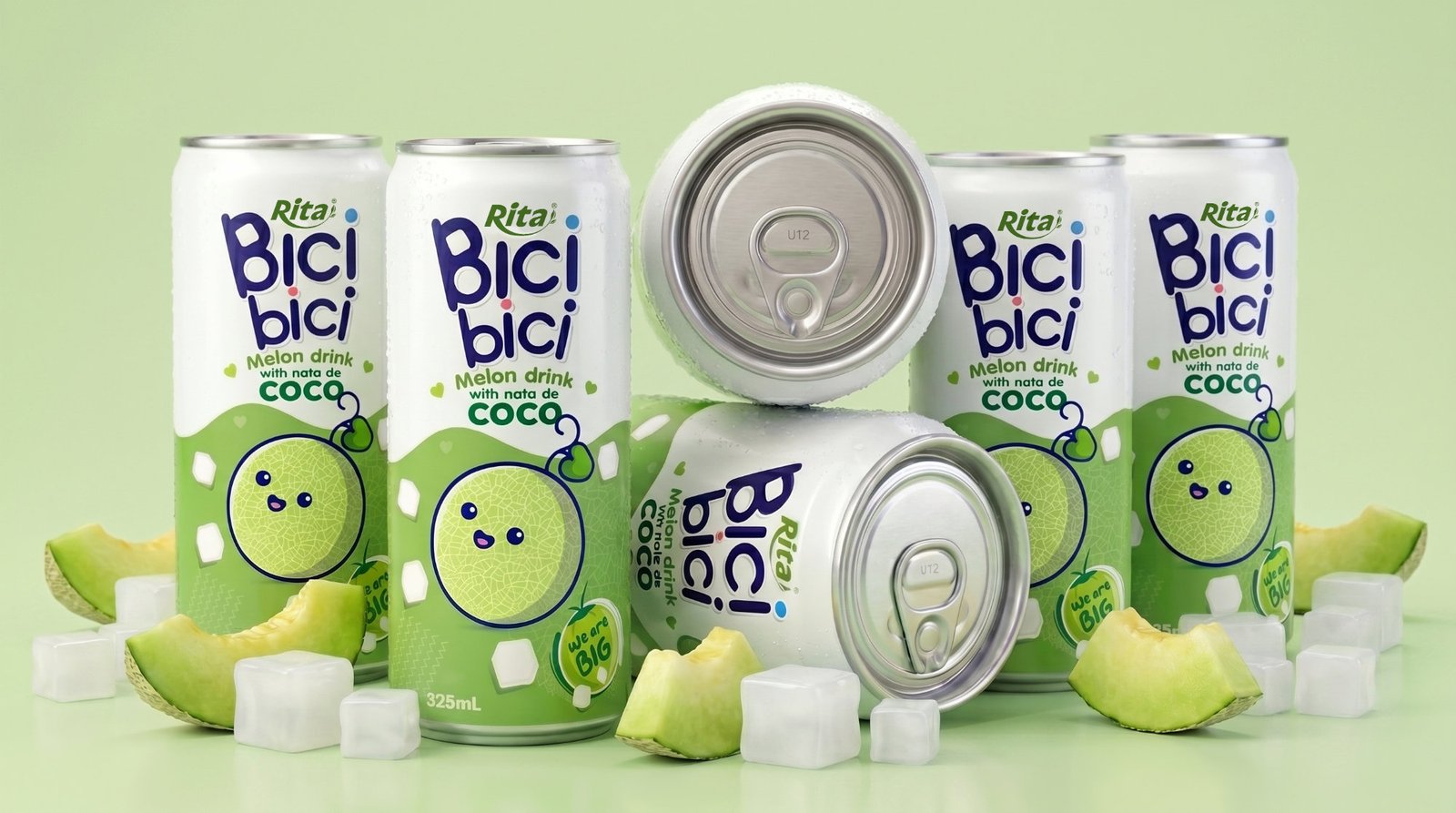
For businesses, these behavioral insights inform product positioning. Marketing campaigns can emphasize the “big” nata de coco pieces and the fun, playful brand personality. The bright green color and cartoon melon character on the can appeal to younger consumers, while the premium aluminum packaging signals quality to adults. Importers should consider co-branding or private label options to build local brand equity.
Supply Chain and OEM/ODM Partnerships: A Strategic Advantage
For importers and distributors, partnering with a Vietnamese manufacturer like RITA offers several strategic benefits. The company operates over 50 production lines with a capacity of 1,200 containers per month, ensuring scalability for large orders. Its certifications—including ISO, HACCP, HALAL, KOSHER, BRC, and FSSC 22000—meet the requirements of both US and Southeast Asian regulators. This reduces the risk of customs delays or compliance issues.
OEM/ODM services allow for customization without significant upfront investment. Importers can adjust the brix (10-12), pH (4.0-4.5), and nutritional profile to match local preferences. For example, a US-based brand might reduce sugar content to align with clean-label trends, while a Southeast Asian brand might increase sweetness. The packaging can also be customized, with options for private label design, including the cartoon character and color scheme. The wide opening mechanism is fully tested for durability, ensuring that the lid peels off smoothly without tearing.
Bulk supply is available with flexible shipping terms. The FOB price is negotiable based on volume, and the minimum order quantity is 500 cartons per order. For large-scale distributors, the supply ability of 1,000 twenty-foot containers per month ensures consistent availability. The product is packed in aluminum cans, which are lightweight and recyclable, reducing shipping costs and environmental impact. Importers can also explore coconut beverage products from the same supplier to diversify their portfolio.
Packaging Innovation: The Wide Opening Can as a Differentiator

The wide opening can is more than a packaging choice—it is a strategic differentiator in crowded markets. Unlike traditional cans with a small drinking hole, the fully removable lid allows consumers to access the entire contents, including large nata de coco pieces. This design solves a common pain point: getting stuck with a straw when trying to enjoy chunky inclusions. The can’s wide mouth also makes it easy to pour into a glass for sharing, adding versatility.
From a manufacturing perspective, the wide opening mechanism requires precision engineering to ensure a tight seal during transport and storage. Vietnamese suppliers have invested in specialized equipment to produce these cans, ensuring that the lid remains intact until opened. The aluminum material is corrosion-resistant and maintains product quality over the 24-month shelf life. For importers, this means fewer returns and higher customer satisfaction.
In the US, the novelty of the wide opening can is a strong marketing hook. Social media influencers and food bloggers often feature such products, driving organic reach. In Southeast Asia, where visual appeal is paramount, the can’s design stands out on shelves. The product’s packaging also includes clear labeling of ingredients, including water, melon juice, nata de coco, sugar, citric acid, and natural flavors, ensuring transparency for consumers.
Competitive Landscape and Future Outlook
The competitive landscape for inclusion beverages is fragmented, with local brands dominating in each region. In the US, major players like Coca-Cola and PepsiCo have launched fruit-based drinks with inclusions, but few offer the specific combination of melon and nata de coco. This presents an opportunity for niche importers to capture early adopters. In Southeast Asia, brands like F&N and Sappe have strong footholds, but the wide opening can format is still rare, offering a differentiation point.
Looking ahead, the trend toward functional and sensory beverages is expected to accelerate. By 2028, the global canned fruit drink market is projected to reach $15 billion, with inclusion drinks accounting for 20% of sales. Importers who establish partnerships now can build long-term supply relationships and brand equity. Vietnamese manufacturers are well-positioned to meet this demand, thanks to their cost advantages and certification portfolios.
For businesses considering entry, the key is to start with a test order to validate the market. The product’s MOQ of 500 cartons is manageable for small to medium-sized importers. Additionally, the supplier’s ability to produce OEM beverage products allows for gradual customization based on feedback. As the market matures, early movers will benefit from brand loyalty and distribution network effects.
Frequently Asked Questions
What is the shelf life of the wide opening can melon drink with nata de coco?
The product has a shelf life of 24 months when stored in a cool, dry place. The aluminum can ensures protection against light and oxygen, maintaining quality throughout the distribution chain.
What certifications does the supplier hold for export to the US?
Vietnamese suppliers like RITA typically hold BRC, FSSC 22000, HALAL, KOSHER, and ISO certifications. For the US market, FDA registration and compliance with low-acid canned food regulations are also provided.
Can I customize the flavor or sweetness for my target market?
Yes, OEM/ODM services allow for customization of brix, pH, and flavor profile. You can adjust sweetness, add functional ingredients, or modify the packaging design. A minimum order quantity of 500 cartons applies.
What is the typical shipping time from Vietnam to the US?
Shipping from Cat Lai Port in Ho Chi Minh City to US West Coast ports takes approximately 20-25 days after order confirmation. FOB pricing is available, and bulk orders of 500 cartons or more are standard.
Is the product suitable for vending machine distribution?
Yes, the 325ml aluminum can is designed for vending machines. The wide opening feature adds novelty, and the durable packaging withstands machine handling. The product’s 24-month shelf life ensures minimal spoilage.
Frequently Asked Questions
- What is the shelf life of the wide opening can melon drink with nata de coco? The product has a shelf life of 24 months when stored in a cool, dry place. The aluminum can ensures protection against light and oxygen, maintaining quality throughout the distribution chain.
- What certifications does the supplier hold for export to the US? Vietnamese suppliers like RITA typically hold BRC, FSSC 22000, HALAL, KOSHER, and ISO certifications. For the US market, FDA registration and compliance with low-acid canned food regulations are also provided.
- Can I customize the flavor or sweetness for my target market? Yes, OEM/ODM services allow for customization of brix, pH, and flavor profile. You can adjust sweetness, add functional ingredients, or modify the packaging design. A minimum order quantity of 500 cartons applies.
- What is the typical shipping time from Vietnam to the US? Shipping from Cat Lai Port in Ho Chi Minh City to US West Coast ports takes approximately 20-25 days after order confirmation. FOB pricing is available, and bulk orders of 500 cartons or more are standard.
- Is the product suitable for vending machine distribution? Yes, the 325ml aluminum can is designed for vending machines. The wide opening feature adds novelty, and the durable packaging withstands machine handling. The product’s 24-month shelf life ensures minimal spoilage.
Newer news items:
- Wide Opening Can Melon Drink With Nata De Coco — A Packaging Innovation Driving Global Beverage Imports - 15/07/2026 08:24
- Premium Canned Juice Imports Rise as Retailers Seek Unique Flavors for 2026 - 15/07/2026 07:42
- Wide Opening Can Melon Drink With Nata De Coco Gains Traction in USA and Middle East Markets - 15/07/2026 07:05
- Wide Opening Can Strawberry Drink with Nata De Coco Trends in USA and Europe - 15/07/2026 06:39
- Wide Opening Can Grape Drink with Nata De Coco Market Trends for US and Middle East Importers - 15/07/2026 05:57
Older news items:
- Bici Bici 325ml Mango Drink With Nata De Coco Wide Opening Can and the Rise of Textured Beverages in the US and Europe - 15/07/2026 05:32
- Wide Opening Can Beverages Reshape Global Distribution for Textured Drinks - 15/07/2026 04:26
- Peach Prebiotic Sparkling Kombucha Market Trends for US and European Importers in 2026 - 15/07/2026 04:25
- Real Lemon Slice Inside Sparkling Water 325ml Slim Cans — A Trend-Driven Opportunity for Global Distributors - 15/07/2026 04:20
- Pineapple Drink with Nata De Coco Wide Opening Can Market Trends for Importers - 15/07/2026 04:18
 084 274 3784788
 No. 8, Thong Nhat Boulevard, Song Than 2 Industrial Park, Di An Ward, HCMC, Vietnam.