Navigating European Beverage Regulations — Sea Moss Coconut Water Enters a Complex Compliance Landscape

The European beverage market is one of the most tightly regulated in the world. From allergen declarations to Novel Food classification, every product that crosses into the EU must satisfy a layered web of food safety, labeling, and import requirements.
For manufacturers targeting markets like Germany, France, the Netherlands, Italy, Spain, and the Nordics, regulatory readiness is no longer optional — it is a prerequisite for shelf placement. The launch of RITA's Coco Sea Moss, a coconut water infused with sea moss and the flavors of strawberry and lemon, illustrates the compliance complexity that functional beverage producers face when entering the continent.
Key Takeaways
- EU beverage regulations span food safety, Novel Food classification, labeling, and import documentation — requiring manufacturers to address each layer before market entry
- Sea moss, as a marine ingredient derived from red algae, may trigger Novel Food assessment under EU Regulation 2015/2283, demanding pre-market authorization
- RITA's certification portfolio — including BRC, FSSC 22000, ISO, HACCP, and SMETA — aligns with the quality benchmarks European retailers and importers expect
- The 325ml sleek can format and 24-month shelf life address both on-the-go consumption trends and long-distance logistics requirements for European distribution
- Regulatory compliance is increasingly a competitive differentiator, with European buyers prioritizing suppliers who can demonstrate verified safety protocols and transparent sourcing
Understanding the EU Regulatory Framework for Imported Beverages
Europe's regulatory environment for food and beverages operates under a unified framework established by the European Commission. Regulation (EC) No 178/2002 sets the general principles of food law, requiring that all food placed on the EU market be safe, properly labeled, and traceable through every stage of production and distribution. For imported beverages, this means that the manufacturer — not just the importer — must demonstrate compliance at origin.
Several regulations govern specific aspects of beverage compliance. Regulation (EC) No 1332/2008 covers food enzymes, while Regulation (EC) No 1333/2008 addresses food additives — both relevant to flavored coconut water formulations. The EU's allergen regulation (Regulation (EU) No 1169/2011) mandates that any product containing or derived from allergenic substances must be clearly declared on the label, even in trace amounts. For a product like Coco Sea Moss Coconut Water, the ingredient list — coconut water, sea moss extract, strawberry flavor, lemon flavor — must be presented in the official language(s) of the destination country.
European retailers in Germany, France, and the Nordics increasingly require suppliers to hold internationally recognized food safety certifications as a condition of doing business. These certifications — particularly BRC (British Retail Consortium), FSSC 22000, and ISO 22000 — serve as third-party verification that the manufacturer's processes meet rigorous safety and quality standards. Without them, even well-formulated products may find the door closed before negotiations begin.
Key Certifications European Buyers Expect
The certification landscape for exported beverages is extensive. Below is a summary of the primary certifications and what each addresses:
| Certification | Scope | Relevance to EU Market |
|---|---|---|
| BRC (Global Standard for Food Safety) | Food safety management | Required by most UK and European major retailers |
| FSSC 22000 | Food safety management system | GFSI-recognized; accepted across EU supply chains |
| ISO 22000 | Food safety management | Framework standard for food safety across the chain |
| HACCP | Hazard analysis and critical control points | Mandatory for food businesses in most EU member states |
| Halal (Jakim / HCA-GCC) | Halal compliance | Relevant for dual-market products (EU + Middle East) |
| Kosher | Kosher compliance | Niche but growing demand in Western Europe |
| SMETA (Sedex Members Ethical Trade Audit) | Social and ethical compliance | Increasingly requested by European retailers for ESG reporting |
Source: European Food Safety Authority (EFSA) and GFSI benchmarking documentation.
RITA, a Vietnamese OEM and ODM beverage manufacturer established in 2004, holds all of the above certifications. The company operates over 50 automated production lines and exports more than 1,200 containers monthly to over 200 countries, making its compliance infrastructure a critical asset for European distribution partners.
The Novel Food Challenge for Sea Moss Ingredients
Sea moss — a colloquial term for several species of red algae (genus Chondrus, Eucheuma, and others) — has surged in popularity as a beverage ingredient. However, its use in EU food products raises a specific regulatory question: does it qualify as a "novel food" under Regulation (EU) No 2015/2283?
What Qualifies as Novel Food?
A novel food is defined as any food that was not consumed to a significant degree within the EU before May 15, 1997. The European Commission maintains a database of authorized novel foods, and any ingredient not listed requires a pre-market safety assessment by EFSA (European Food Safety Authority) before it can be legally sold. The assessment evaluates toxicity, allergenicity, nutritional composition, and the history of use in non-EU markets.
For sea moss, the regulatory pathway depends on the specific species used and the form in which it appears in the final product. Some species of red algae have a history of use in Asian and Caribbean cuisines, which may support an application for authorization. Others, particularly those not previously documented in EU food use, face a higher burden of evidence. Manufacturers must provide detailed dossiers covering the botanical identity of the algae, extraction methods, compositional analysis, and any published safety studies.
Regulatory Pathway for Sea Moss Beverages
The Novel Food authorization process typically follows these steps:
- Pre-submission consultation: Engaging with the competent national authority (e.g., BVL in Germany, ANSES in France) to clarify classification requirements
- Dossier preparation: Compiling a comprehensive application including botanical identification, production process description, compositional data, and proposed uses
- EFSA evaluation: Scientific review by the Panel on Nutrition, Novel Foods and Food Allergens (NDA), typically taking 9-18 months
- Authorization and listing: Upon favorable opinion, the European Commission adopts an implementing regulation adding the ingredient to the Union list of authorized novel foods
For beverage manufacturers, the implication is clear: products containing sea moss must navigate this pathway before EU market entry. Companies that invest in early regulatory engagement and thorough dossier preparation gain a first-mover advantage in an emerging product category.
RITA's Approach to Multi-Market Compliance
RITA's Coco Sea Moss Coconut Water represents a case study in how manufacturers can approach the European regulatory landscape. The company's compliance strategy addresses multiple layers of the EU regulatory framework simultaneously.
At the production level, RITA's facilities are certified under BRC, FSSC 22000, and ISO 22000 — the three certifications most frequently cited in European retailer supplier codes of conduct. The company's adherence to HACCP principles provides the hazard analysis and critical control point documentation that EU importers require as part of their due diligence obligations. Additionally, SMETA certification addresses the social and ethical compliance dimension that European retailers increasingly demand under their ESG (Environmental, Social, and Governance) reporting frameworks.
From a formulation standpoint, the product's nutritional profile — 20 kcal per 100ml, 0g fat, 134mg potassium per 100ml, and negligible sodium — aligns with EU front-of-pack nutrition labeling expectations, particularly in markets like France (Nutri-Score) and the Netherlands. The Brix of 5.0±0.2 and pH of 3.7±0.2 indicate a product that meets the stability and microbiological safety requirements necessary for a 24-month shelf life — a critical factor for products traversing long supply chains from Southeast Asia to European ports.
Labeling Compliance Across EU Member States
EU Regulation 1169/2011 establishes mandatory labeling requirements for all food products. For the 325ml sleek can of Coco Sea Moss, the label must include the product name, ingredient list (descending order of weight), allergen declarations (bold or highlighted), net quantity, date of minimum durability (best before date), storage conditions, name and address of the manufacturer or importer, country of origin, and nutrition declaration per 100ml and per portion.
The multi-language requirement adds a further layer of complexity. A single product distributed across Germany, France, the Netherlands, Italy, Spain, and the Nordics may require label translations in up to eight languages, depending on the specific destination markets. RITA's private label and OEM capabilities allow European distributors to customize labeling while maintaining compliance with local language requirements — a significant advantage in a market where labeling errors can result in product recalls or market withdrawal.
From Farm to Factory — Sourcing and Traceability
EU Regulation 178/2002 requires that all food products be traceable at every stage of the supply chain. For imported beverages, this means the manufacturer must be able to identify the source of every raw ingredient, from farm or extraction point through processing and packaging.
RITA sources its coconut water from Vietnam's Mekong Delta, a region renowned for its high-quality coconut cultivation. The company's Mekong Delta raw material sourcing operations provide the traceability documentation that European importers require, including farm-level identification, harvest dates, and processing chain records.
The production facility, located in Vietnam, operates under the same traceability standards required for EU export. Each batch of coconut products is assigned a unique production code that links raw material inputs to finished goods, enabling rapid identification and recall if necessary. This level of traceability is not merely a regulatory checkbox — it is a commercial asset in a market where food safety incidents can permanently damage brand reputation.
EU Import Requirements and Market Entry Logistics
Importing beverages into the EU involves more than meeting product-specific regulations. Importers must navigate customs procedures, tariff classifications, and border inspection protocols. The EU's Rapid Alert System for Food and Feed (RASFF) enables member states to share information about food safety risks, meaning that a non-compliant product detected at one border can trigger alerts across the entire Union.
For a product like Coco Sea Moss Coconut Water, the customs classification falls under HS code 2202 (waters, including mineral and aerated, sweetened or flavored). The applicable tariff rate depends on the specific EU member state and any preferential trade agreements in force between the EU and Vietnam. The EU-Vietnam Free Trade Agreement (EVFTA), which entered into force in August 2020, has progressively reduced tariffs on Vietnamese food and beverage exports, providing a competitive advantage for compliant manufacturers.
European ports of entry — including Rotterdam (Netherlands), Hamburg (Germany), and Le Havre (France) — require that imported food products be accompanied by a commercial invoice, packing list, certificate of origin, health certificate, and any product-specific documentation required by the destination country's competent authority. RITA's export experience across 200+ countries and territories positions the company to manage these requirements efficiently, though the specific documentation burden varies by destination.
Shelf Life and Cold Chain Considerations
The 24-month shelf life of the Coco Sea Moss product is a significant regulatory and commercial advantage. Extended shelf life eliminates the need for cold chain logistics — a requirement that adds substantial cost and complexity to beverage distribution in Europe. For retailers, products with long shelf lives reduce waste and simplify inventory management. For regulators, stable microbiological profiles over extended periods provide confidence in the product's safety throughout its commercial life.
Competitive Landscape — Regulatory Compliance as Market Differentiator
The European coconut water market is crowded, with established brands from Brazil, Thailand, and the Philippines competing alongside smaller specialty producers. In this environment, regulatory compliance has emerged as a key differentiator. European retailers and distributors increasingly evaluate potential suppliers not just on product quality and price, but on the robustness of their compliance infrastructure.
RITA's Coco Sea Moss enters this market with a compliance profile that addresses the primary concerns of European buyers: food safety (BRC, FSSC 22000, HACCP, ISO), ethical sourcing (SMETA), and the regulatory framework necessary for Novel Food ingredients. The sea moss component, while requiring careful regulatory navigation, also offers a point of differentiation in a market where novelty and ingredient transparency are increasingly valued by consumers.
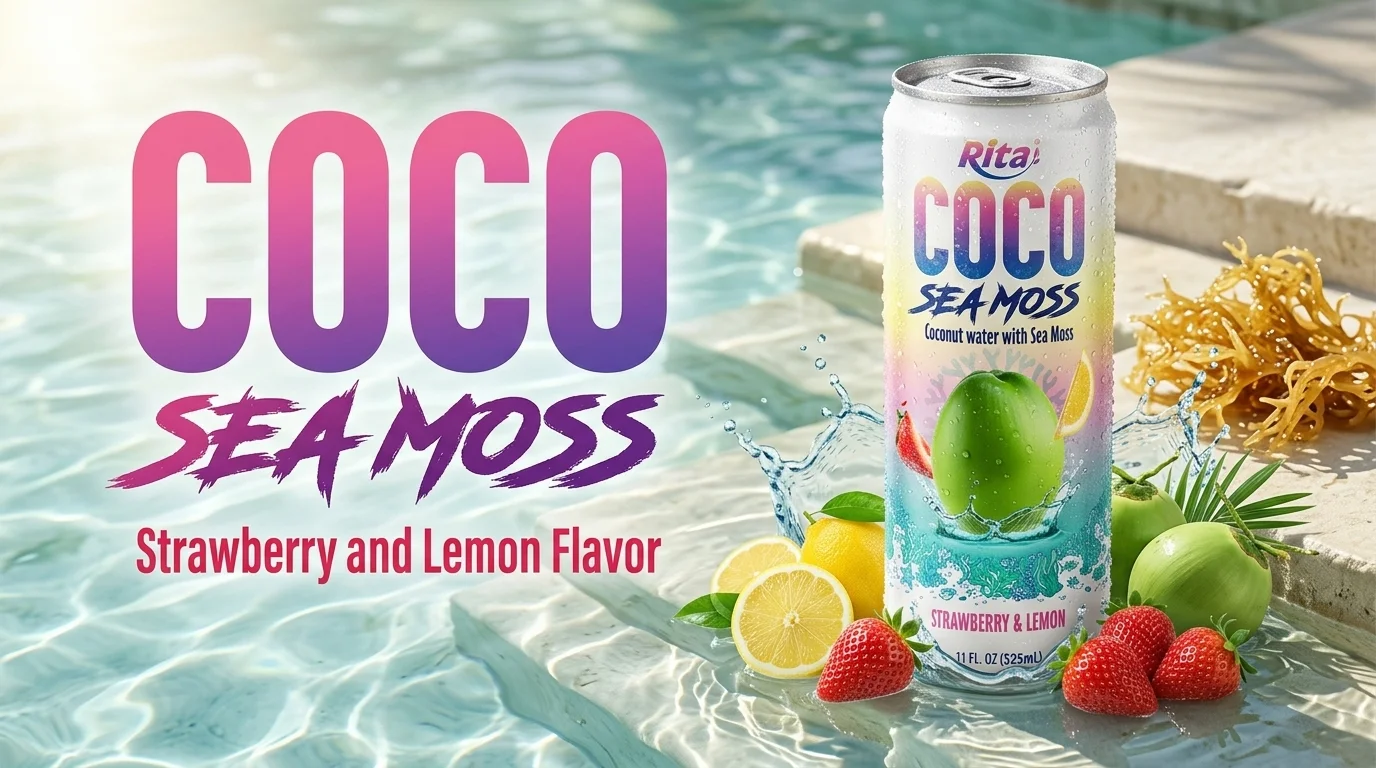
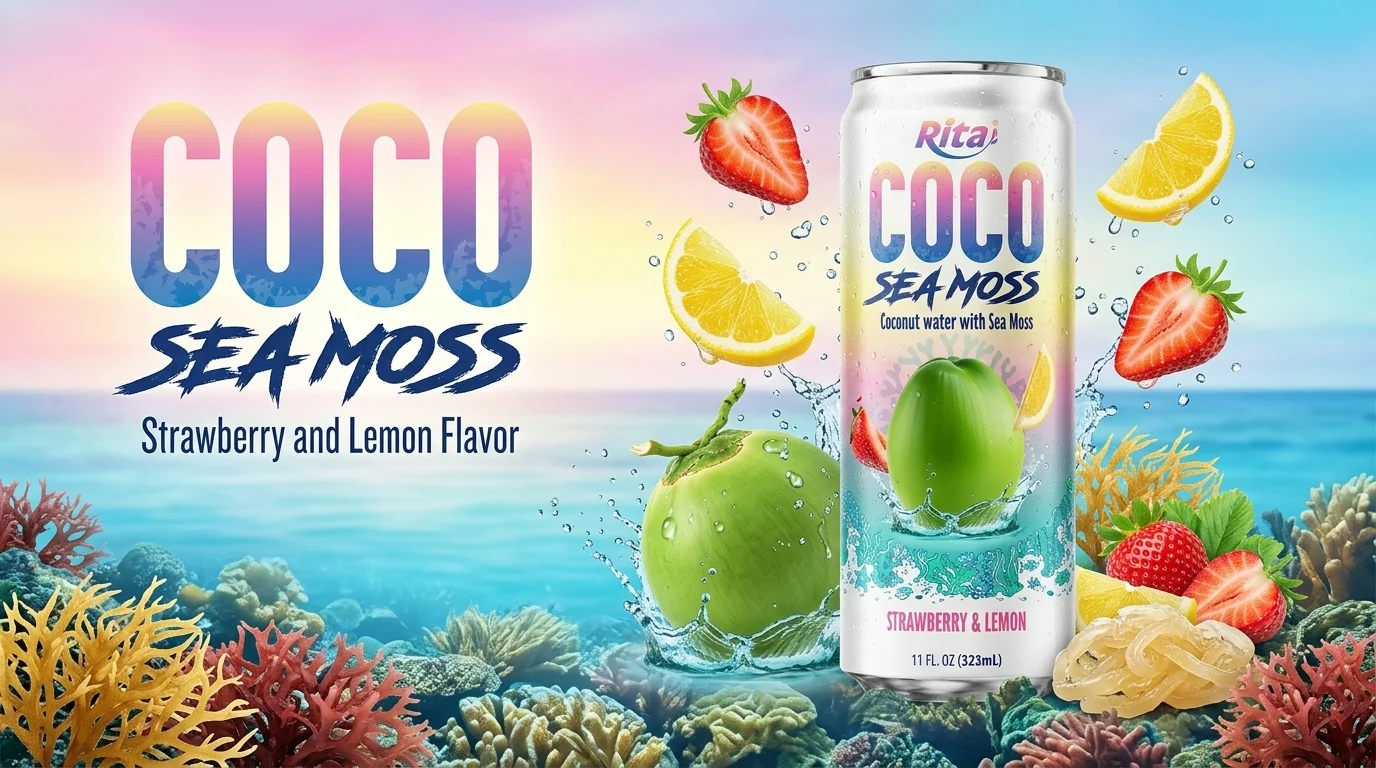
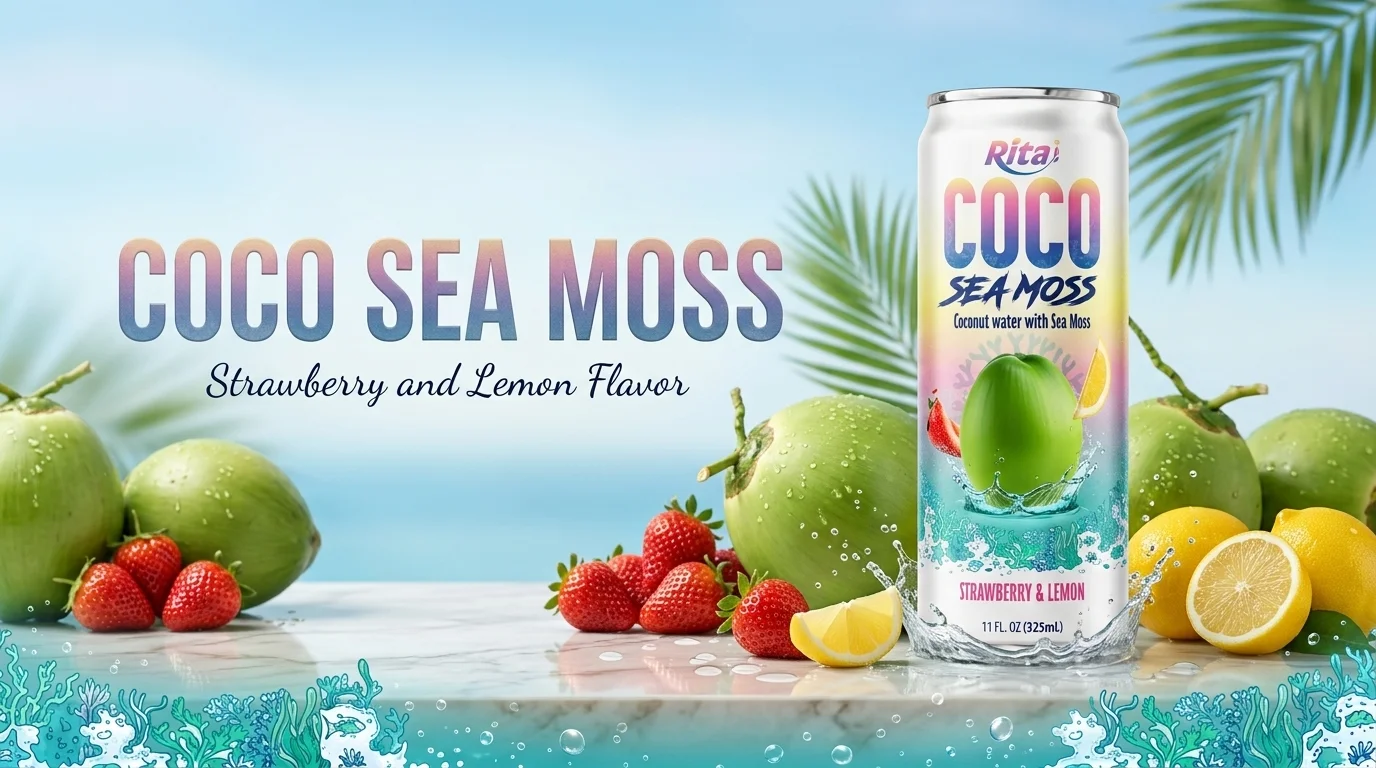
The product's 325ml sleek can format aligns with European consumption patterns, where single-serve, on-the-go beverages represent a growing market segment. The can's design — featuring a white background with gradient accents of yellow, pink, and blue, alongside imagery of coconut, strawberry, and lemon — communicates both the product's tropical origins and its premium positioning. For European retailers evaluating shelf appeal, the combination of a distinctive visual identity and a robust compliance story creates a compelling proposition.
The Road Ahead — Regulatory Trends Shaping the European Beverage Market
The regulatory landscape for imported beverages in Europe continues to evolve. Several trends will shape the market over the coming years:
- Front-of-pack nutrition labeling: The EU is moving toward mandatory front-of-pack nutrition labeling, with the Nutri-Score system gaining traction. Products with favorable nutritional profiles — like the 20 kcal/100ml Coco Sea Moss — will benefit from early alignment with these requirements.
- Sustainability and ESG reporting: The EU's Corporate Sustainability Reporting Directive (CSRD) is extending ESG requirements to a broader range of companies, including food and beverage importers. Suppliers with transparent sourcing and ethical compliance documentation will be preferred partners.
- Novel Food pipeline: As more marine-based ingredients enter the Novel Food authorization pipeline, the regulatory pathway is becoming clearer, reducing barriers for future product launches in this category.
- Digital traceability: The EU is exploring blockchain and other digital technologies to enhance food traceability. Manufacturers with robust data systems — including batch-level traceability from source to shelf — will be better positioned to meet emerging requirements.
For manufacturers like RITA, the message is clear: regulatory readiness is not a cost center — it is a strategic asset. The ability to navigate Europe's complex compliance landscape, from Novel Food classification to multi-language labeling to ethical sourcing audits, determines not just market access but long-term competitive position. As the European beverage market continues to evolve toward greater transparency and accountability, manufacturers who invest in regulatory infrastructure today will be the ones defining the market tomorrow.
Frequently Asked Questions
Is sea moss classified as a Novel Food in the EU?
Sea moss may be classified as a Novel Food under Regulation (EU) No 2015/2283, depending on the specific species used and its history of consumption in the EU before May 15, 1997. Manufacturers must submit a dossier to EFSA for a safety assessment before placing sea moss-containing products on the EU market.
What certifications does RITA hold for EU export?
RITA holds BRC, FSSC 22000, ISO 22000, HACCP, GMP, Halal (Jakim and HCA-GCC), Kosher, and SMETA certifications. These credentials are recognized by European retailers and importers as evidence of food safety and ethical compliance.
How long is the shelf life of the Coco Sea Moss product?
The Coco Sea Moss Coconut Water has a shelf life of 24 months, which eliminates the need for cold chain logistics and simplifies distribution across European markets.
Can RITA customize labeling for different EU markets?
Yes. RITA offers private label and OEM services that include multi-language labeling compliant with EU Regulation 1169/2011. Products can be customized for specific destination markets, including label translations and local regulatory requirements.
What are the minimum order quantities for EU export?
Minimum order quantities are flexible and can be discussed directly with RITA's export team. The company operates 50+ automated production lines and exports over 1,200 containers monthly, providing capacity for both large-volume orders and smaller initial market testing shipments.
Global Coconut Water Market & Export Overview
Annual Trade Trend (2025 vs 2026)
| Year | Transactions (Lô) | Total Value (USD) | Total Weight (Kg) | Total Quantity (Đơn vị) | YoY Change |
|---|---|---|---|---|---|
| 2025 | 30,736 | USD 587,357,440 | 521,062,036 kg | 288,325,563 đơn vị | — |
| 2026 | 40,525 | USD 566,028,847 | 862,715,925 kg | 339,922,262 đơn vị | +31.8% transactions / −3.6% value / +65.6% weight / +17.9% quantity |
Data source: Tradesparq Trade Data (tradesparq.com)
Top Origin Countries (by Transaction Count)
| Country | Transactions | Value (USD) | Weight (Kg) | Market Share | Avg Price (USD/đv) |
|---|---|---|---|---|---|
| Vietnam | 31,532 | USD 407,282,796 | 341,508,843 kg | 44.9% | 1.32 |
| Argentina | 6,723 | USD 396,476,196 | 54,183,641 kg | 9.6% | 2.62 |
| Thailand | 6,402 | USD 6,548,648 | 247,372,932 kg | 9.1% | 0.18 |
| China | 3,677 | USD 8,441,002 | 128,233,281 kg | 5.2% | 0.26 |
| Philippines | 3,106 | USD 165,622,359 | 163,272,952 kg | 4.4% | 17.59 |
| United States | 2,983 | USD 16,936,376 | 25,819,402 kg | 4.2% | 13.65 |
| Indonesia | 1,445 | USD 32,129,607 | 19,024,502 kg | 2.1% | 2.73 |
| India | 1,382 | USD 6,377,957 | 12,652,845 kg | 2.0% | 0.58 |
Data source: Tradesparq Trade Data (tradesparq.com)
Top Destination Countries (by Transaction Count)
| Country | Transactions | Value (USD) | Weight (Kg) | Market Share | Avg Price (USD/đv) |
|---|---|---|---|---|---|
| United States | 33,501 | USD 376,251,733 | 1,118,492,507 kg | 47.3% | 1.51 |
| Australia | 3,262 | USD 54,453,356 | 438,020 kg | 4.6% | 2.46 |
| Vietnam | 3,175 | USD 40,383,813 | 8,023,765 kg | 4.5% | 1.37 |
| Singapore | 3,122 | USD 89,723,882 | 9,651,955 kg | 4.4% | 0.79 |
| Netherlands | 2,347 | USD 108,766,617 | 30,248,792 kg | 3.3% | 4.05 |
| Peru | 1,766 | USD 7,125,398 | 1,247,942 kg | 2.5% | 3.73 |
| United Kingdom | 1,604 | USD 40,931,218 | 37,707,131 kg | 2.3% | 5.54 |
| Mexico | 1,399 | USD 11,812,236 | 10,699,694 kg | 2.0% | 2.40 |
Data source: Tradesparq Trade Data (tradesparq.com)
The global coconut water trade is growing rapidly in volume: transactions rose 31.8% year-on-year (2025–2026) and total weight surged 65.6%, reflecting a shift toward bulk shipments driven by large distributors and food-processing enterprises. Vietnam stands as the world's dominant exporter with a 44.9% market share by transaction count, leveraging competitive pricing at USD 1.32 per unit. Argentina follows as the second-largest origin by value (USD 396 million), while the Philippines and United States command premium pricing at USD 17.59 and USD 13.65 per unit respectively, indicating strong demand for organic, cold-pressed, and specialty coconut water products.
On the demand side, the United States absorbs nearly half (47.3%) of all global coconut water transactions with 33,501 shipments — a massive market for both mass-market and mid-range products, particularly flavored and electrolyte-enhanced coconut water. Australia and the United Kingdom represent higher-value import markets at USD 2.46 and USD 5.54 per unit respectively. Singapore functions as a key regional re-export hub, while the Netherlands serves as the primary distribution gateway for mid-to-premium coconut water across Europe.
Related news items:
Newer news items:
- Vietnam's Yuzu Electrolyte Water Targets Europe's Low-Sugar Aisle - 02/10/2026 05:47
- RITA's Angry Water Launches Sparkling Coconut Protein in Europe - 29/09/2026 07:49
- How Yuzu Electrolyte Water Is Reshaping Consumer Hydration Choices - 29/09/2026 07:21
- Rita Celebrates Mid-Autumn Festival with Employees and Partners - 23/09/2026 08:04
- Rita Visits a Guava Farm in Dong Thap to Explore Fresh Fruit Sourcing - 22/09/2026 02:46
Older news items:
- Sustainability-Driven Coconut Water With Watermelon Juice Redefines Modern Beverage Standards - 18/09/2026 09:04
- Ginger Milk Tea Meets European Regulatory Standards in the RTD Beverage Space - 18/09/2026 08:44
- 100 Natural Peach Juice Drink Opens New Export Opportunities Across Europe - 17/09/2026 07:37
- Orange Cream Prebiotic Soda Gains Traction in European Sparkling Market - 17/09/2026 07:20
- Real Lemon Slices in Cans Define the Future of Clean-Label Sparkling Water - 11/09/2026 08:22
 084 274 3784788
 No. 8, Thong Nhat Boulevard, Song Than 2 Industrial Park, Di An Ward, HCMC, Vietnam.