
Sustainability-Driven Coconut Water With Watermelon Juice Redefines Modern Beverage Standards

The global beverage industry is undergoing a profound transformation as sustainability moves from a marketing buzzword to a foundational business requirement. Across Europe, regulators, retailers, and consumers are demanding that beverages not only taste good but also reflect responsible practices at every stage of the value chain — from raw material sourcing through manufacturing to packaging and end-of-life disposal.
In this evolving landscape, products like the coconut water with watermelon juice combination offered by COCO JUS are attracting attention for how they align natural ingredient appeal with environmentally conscious production and packaging strategies.
Key Takeaways
- The European beverage market is accelerating its shift toward sustainable, clean-label products with transparent ingredient sourcing and recyclable packaging
- COCO JUS Real Coconut Water With Watermelon Juice combines real fruit ingredients in a recyclable PET bottle, meeting growing demand for naturally inspired, low-impact drinks
- RITA Food and Drink Co., Ltd operates 50+ automated production lines with internationally recognized certifications, delivering sustainable OEM and private label solutions to 200+ countries
- Coconut water-based beverages are gaining traction across European retail, foodservice, and vending channels as part of broader sustainability trends
- Strategic packaging choices and supply chain efficiency are key differentiators for brands entering the competitive European market
Sustainability Reshaping the European Beverage Landscape
The European Union's Green Deal and evolving Extended Producer Responsibility regulations are fundamentally altering how beverages are manufactured, packaged, and distributed across the continent. Germany's Verpackungsgesetz, France's AGEC law, and the Netherlands' Circular Packaging Strategy are setting new benchmarks that require manufacturers to demonstrate measurable environmental commitments. These regulatory frameworks are not merely compliance hurdles — they represent a fundamental market shift where sustainability credentials directly influence consumer purchasing decisions and retailer shelf allocation.
For beverage brands operating in Germany, France, the Netherlands, Italy, Spain, and the Nordic countries — Sweden, Norway, Denmark, and Finland — the challenge extends well beyond offering a quality product. The entire value chain must reflect a coherent sustainability narrative that withstands scrutiny from regulators, retailers, and increasingly informed consumers. This reality is driving partnerships with manufacturers who can deliver on both product quality and environmental responsibility, creating a new competitive dynamic in the European soft drinks sector.
The fruit-flavored coconut water segment sits at the intersection of several converging trends: demand for natural ingredients, preference for recyclable packaging, and appetite for flavor innovation that breaks away from traditional juice categories. Products that successfully navigate these expectations are well positioned to capture market share in one of the world's most demanding beverage markets.
Coconut Water and Watermelon Juice — A Naturally Sustainable Combination
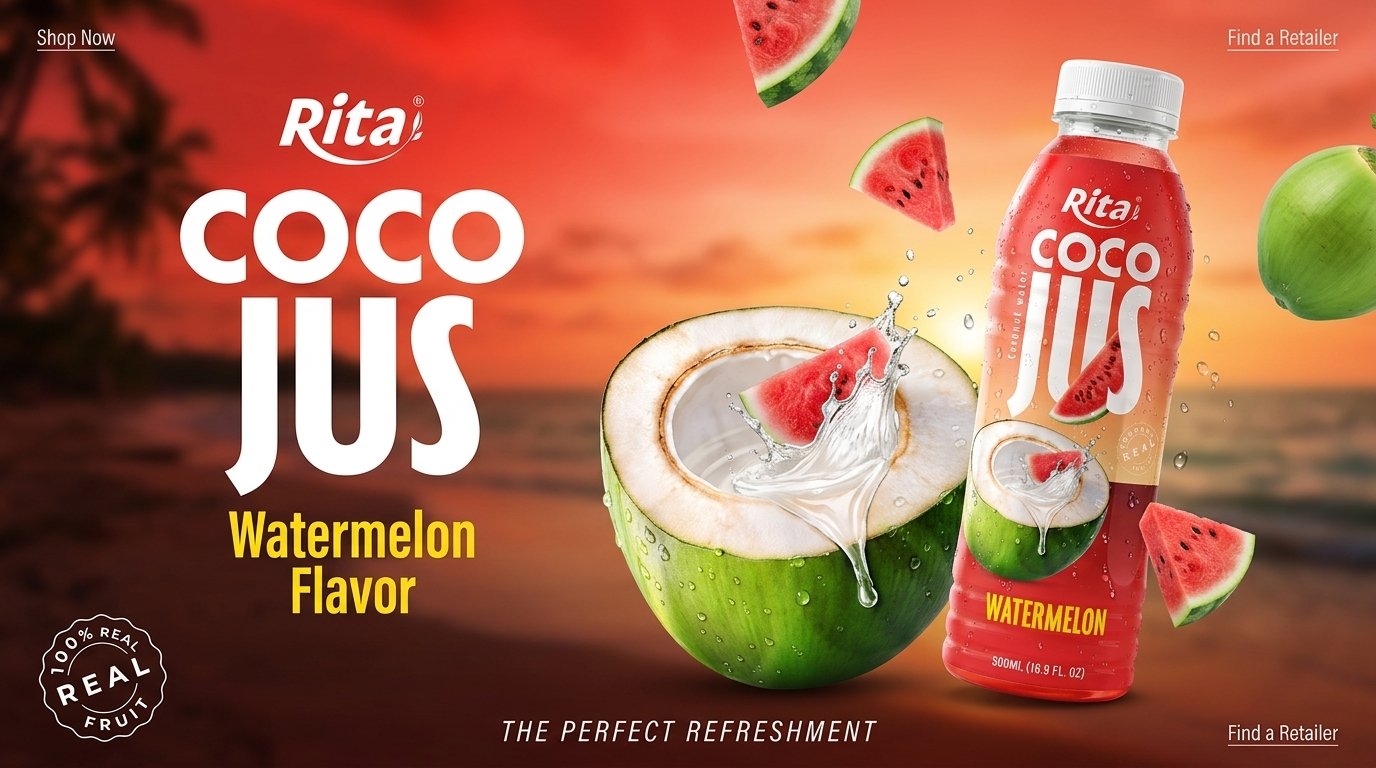
The pairing of coconut water with watermelon juice represents more than a flavor experiment; it reflects a strategic alignment with consumer preferences for beverages made from recognizable, naturally sourced ingredients. Coconut water has firmly established itself as a mainstream beverage category across Europe, valued for its clean taste profile and versatility across consumption occasions. Watermelon juice, meanwhile, is emerging as a refreshing complement that adds visual appeal and a distinctive fruit-forward character that resonates with younger European demographics.
COCO JUS Real Coconut Water With Watermelon Juice delivers this combination in a 500ml (16.9 Fl Oz) format designed for the European single-serve market. The product features coconut water, water, watermelon juice, sugar, citric acid, watermelon flavor, preservatives, colors, and sucralose — a formulation that balances consumer taste expectations with production efficiency and shelf stability. With a Brix level of 7.0 and pH of 4.0, the beverage offers a crisp, balanced profile that avoids excessive sweetness, a characteristic that resonates particularly well with Northern European palates where moderation in sugar content is a growing priority.
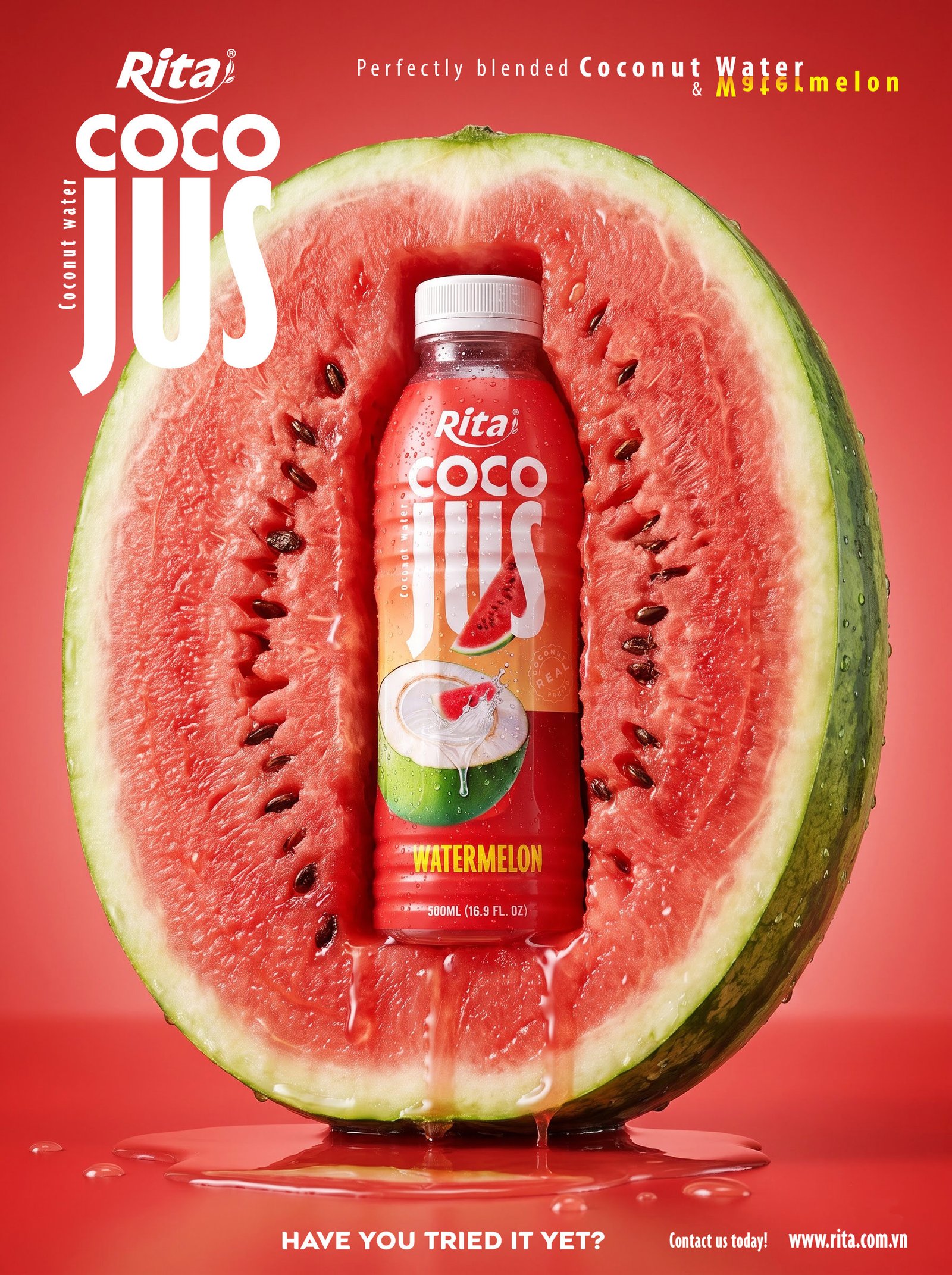
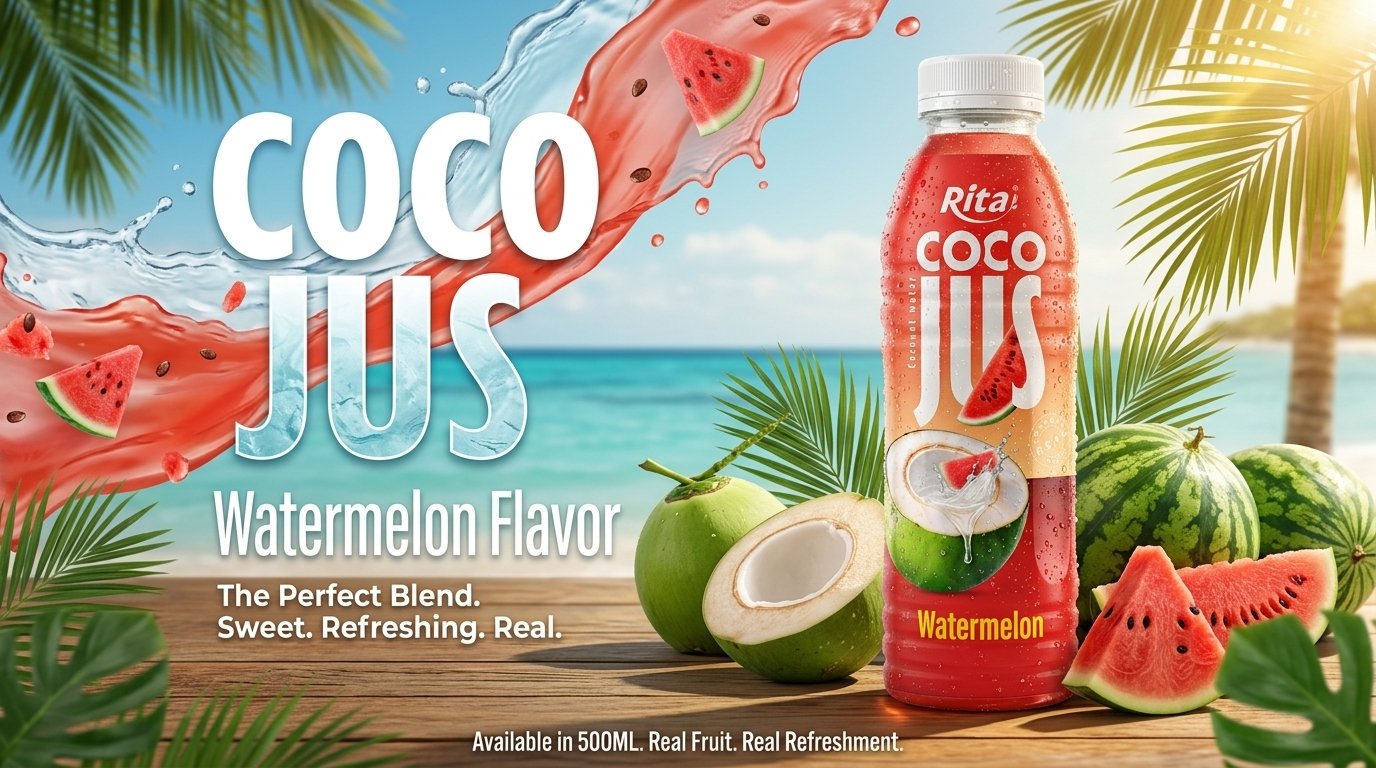
The visual identity of the product reinforces its natural positioning. The PET bottle showcases a vibrant red-to-orange gradient label adorned with imagery of halved coconuts and fresh watermelon, communicating the product's fruit-based identity at the point of sale. This design approach matters considerably in European retail environments where shelf differentiation and visual storytelling drive impulse purchasing behavior.
Flavor Innovation as a Market Entry Strategy
In a market saturated with traditional fruit juices and carbonated soft drinks, the coconut water with watermelon juice combination occupies a distinctive niche that offers genuine differentiation. The flavor pairing appeals to consumers seeking alternatives to conventional options while maintaining the familiarity of well-known fruit profiles. For brands exploring European market entry, this type of innovation can serve as a powerful differentiator that generates initial consumer interest and supports premium positioning against established competitors.
The versatility of the product also extends its commercial potential significantly. Beyond standalone consumption, coconut water with watermelon juice functions as a base for cocktails, mocktails, and sparkling mixers — applications that are increasingly relevant in the European foodservice and hospitality sectors. This adaptability makes the product attractive across multiple distribution channels, creating a broader commercial footprint that enhances return on investment for brand partners.
Key Product Specifications
| Specification | Detail |
|---|---|
| Product Name | COCO JUS Real Coconut Water With Watermelon Juice |
| Volume | 500ml (16.9 Fl Oz) |
| Packaging | PET Bottle with vibrant gradient label |
| Key Ingredients | Coconut Water, Watermelon Juice, Sugar, Citric Acid |
| Brix Level | 7.0 |
| pH | 4.0 |
| Energy | 140 kcal per 500ml |
| Potassium | 560mg per 500ml |
| Shelf Life | 18 months under proper storage |
Raw Material Sourcing and Environmental Commitment
Sustainable beverage production begins at the source. The quality and environmental footprint of raw materials directly influence the final product's sustainability profile, making supply chain transparency a critical consideration for European buyers and regulators who increasingly demand traceability from farm to shelf.
Coconut water sourcing represents a particularly compelling case study in sustainable supply chains. Vietnam's coconut-growing regions, particularly in the Mekong Delta and Ben Tre province, provide access to mature coconut varieties that are harvested and processed with remarkable efficiency. Ben Tre coconut farm operations in Vietnam demonstrate how traditional coconut cultivation can be integrated with modern quality management practices, ensuring consistent supply while maintaining agricultural traditions that have sustained local communities for generations. The region's equatorial climate and abundant water resources create ideal growing conditions that reduce the need for intensive agricultural inputs.
Watermelon, the complementary ingredient in the COCO JUS coconut water with watermelon juice blend, benefits from Vietnam's diverse agricultural landscape and favorable growing seasons. The Mekong Delta region produces a wide variety of tropical fruits that serve as premium raw materials for the beverage industry. The Mekong Delta's role as a high-quality raw ingredients area highlights how geographic advantages translate into consistent product quality and supply reliability for international markets spanning from Europe to the Middle East and beyond.
For European brands and retailers evaluating supply partners, the ability to trace raw materials to their geographic origin is becoming a non-negotiable requirement. Transparency in sourcing not only builds consumer trust but also supports compliance with EU corporate sustainability due diligence requirements that are expected to expand significantly in scope over the coming years.
Packaging Innovation and Recyclability
Packaging sustainability is perhaps the most visible and scrutinized aspect of a beverage's environmental profile, and it is an area where European regulations are driving rapid, measurable change. The COCO JUS product is packaged in a PET bottle — a material choice that reflects both practical distribution considerations and long-term sustainability objectives that align with circular economy principles.
PET (polyethylene terephthalate) remains one of the most widely recycled packaging materials across Europe, with established collection and processing infrastructure spanning Germany, France, the Netherlands, and the Nordic countries. Modern PET bottles can incorporate significant percentages of recycled content (rPET), and the material's recyclability directly supports circular economy goals that are central to the EU's packaging strategy through 2030 and beyond. Germany's advanced dual-system recycling framework, in particular, achieves PET collection rates that exceed 90%, demonstrating the material's compatibility with existing European waste management systems.
The packaging design itself plays a meaningful role in recyclability outcomes. Clear material labeling, minimal use of mixed-material components, and optimized bottle weight all contribute to end-of-life processing efficiency. For brands entering the European market, packaging decisions must account for these technical factors alongside shelf appeal, transportation logistics, and the increasingly specific requirements of individual national recycling systems. The COCO JUS PET bottle design demonstrates how manufacturers can address these multi-dimensional packaging challenges within a commercially viable production framework.
The 500ml format of the COCO JUS bottle is strategically relevant for European distribution patterns. Single-serve packaging continues to dominate European beverage consumption, particularly in on-the-go contexts, convenience retail, and foodservice settings. The format balances consumer convenience with material efficiency, offering a practical solution that minimizes per-serving packaging waste while maximizing shelf presence and portability.
European Market Demand and Consumer Trends
Consumer preferences across Europe are evolving in ways that fundamentally favor beverages with transparent ingredient lists and verifiable sustainable production credentials. The clean-label movement, which emphasizes simple, recognizable ingredients and honest manufacturing practices, has gained significant momentum across the continent and shows no signs of slowing. Products that clearly communicate what they contain — and how those ingredients are responsibly sourced — enjoy a measurable competitive advantage in this environment.
Germany, as Europe's largest beverage market by volume and value, sets the tone for regional trends that ripple across the continent. German consumers are known for their rigorous attention to product quality and ingredient transparency, making the market both demanding and rewarding for brands that can credibly deliver on sustainability promises. France and Italy bring strong cultural traditions around food and beverage quality that elevate consumer expectations, while the Netherlands serves as a critical logistics hub for European distribution, handling a significant share of imported beverages destined for continental retail shelves.
The Nordic countries — Sweden, Norway, Denmark, and Finland — consistently rank among the world's most sustainability-conscious consumer markets, with consumers willing to pay premium prices for beverages that demonstrate genuine environmental commitments. This premium tolerance creates opportunities for products like COCO JUS Real Coconut Water With Watermelon Juice, which combines natural ingredient positioning with recyclable packaging that meets Nordic recycling expectations.
Market & Export Overview
Annual Trade Trend
| Year | Transaction Count | Total Trade Value (USD) | Total Weight (kg) | Total Quantity (units) |
|---|---|---|---|---|
| 2025 | 10 | 110,039 | 47,146 | 31,100 |
| 2026 | 24 | 156,663 | 521,812 | 117,210 |
| YoY Growth | 140% | 42% | 1007% | 277% |
Data source: Tradesparq Trade Data (tradesparq.com)
Top Origin Countries
| Origin Country | Transaction Count | Trade Value (USD) | Weight (kg) | Quantity (units) | Market Share |
|---|---|---|---|---|---|
| Vietnam | 29 | 266,702 | 402,721 | 122,654 | 85% |
| Malaysia | 2 | 0 | 43,948 | 3,900 | 6% |
| Guatemala | 1 | 0 | 20,671 | 1,977 | 3% |
| Netherlands | 1 | 0 | 92,806 | 19,218 | 3% |
| Taiwan | 1 | 0 | 8,812 | 560 | 3% |
Data source: Tradesparq Trade Data (tradesparq.com)
Top Destination Countries
| Destination Country | Transaction Count | Trade Value (USD) | Weight (kg) | Quantity (units) | Market Share |
|---|---|---|---|---|---|
| United States | 26 | 215,411 | 542,258 | 138,906 | 76% |
| United Arab Emirates | 2 | 4,638 | 0 | 1,040 | 6% |
| Chile | 2 | 15,744 | 0 | 2,253 | 6% |
| Panama | 2 | 3,426 | 26,700 | 601 | 6% |
| Australia | 1 | 49 | 0 | 49 | 3% |
| Vietnam | 1 | 27,434 | 0 | 5,460 | 3% |
Data source: Tradesparq Trade Data (tradesparq.com)
The trade data reveals that Vietnam dominates as the leading origin country, accounting for 85% of all transactions and 96% of total trade value. This strong position reflects Vietnam's established coconut cultivation industry and beverage manufacturing infrastructure. On the destination side, the United States leads decisively with 76% of transactions and 77% of total trade value, driven by growing consumer demand for healthy, natural beverages. Emerging markets in the Middle East and Latin America, including the United Arab Emirates, Chile, and Panama, each represent 6% of transactions and signal expanding global demand for coconut water with blueberry.
The year-on-year growth figures are striking: transaction count rose 140%, total weight surged 1007%, and quantity expanded 277% from 2025 to 2026. These trends indicate a shift toward larger bulk shipments and increasing market confidence. July 2026 was the peak month, contributing 32% of annual transactions and 46% of total trade value, while several months in 2026 showed zero trade value despite positive weight figures, likely due to data reporting variations or intra-company transfers.
Data source: Tradesparq Trade Data (tradesparq.com)
Distribution Channel Opportunities
The European beverage distribution landscape offers multiple strategic pathways for product placement, each with distinct requirements and opportunities. Modern retail chains remain the primary channel for consumer packaged beverages, but foodservice, vending, and e-commerce are rapidly growing segments that reward product versatility and adaptability. A product that performs consistently well across these channels — offering shelf stability, visual appeal, flavor consistency, and packaging durability — maximizes its commercial potential and reduces per-channel adaptation costs.
For brands leveraging OEM and ODM manufacturing partnerships, the ability to customize products for specific channel requirements represents a significant competitive advantage. This customization capability includes variations in packaging format, multilingual labeling for different national markets, and even subtle flavor adjustments to suit regional taste preferences within the broader European market landscape.
OEM Capabilities and Sustainable Manufacturing at Scale
RITA Food and Drink Co., Ltd, established in 2004, exemplifies the type of manufacturing partner that European brands increasingly require for sustainable market entry. With 50+ automated production lines and the capacity to export 1,200+ containers monthly, the company operates at a scale that supports both established multinational brands and emerging market entrants seeking reliable production partnerships.
The manufacturer's comprehensive OEM beverage manufacturing services allow European companies to bring products to market without the substantial capital investment of building their own production facilities. This model is particularly relevant for sustainability-focused brands, as it provides access to manufacturers who have already invested significantly in efficient production technologies, comprehensive quality management systems, and environmental compliance frameworks. The result is a lower barrier to market entry while maintaining the sustainability standards that European consumers and regulators demand.
RITA's internationally recognized certifications — including BRC, FSSC 22000, ISO, GMP, HACCP, and SMETA — provide assurance that products meet the quality, safety, and ethical standards expected by European retailers and regulators. For buyers evaluating potential manufacturing partners, these certifications represent a baseline of operational excellence that reduces supply chain risk and accelerates time to market. The company's coconut product range further demonstrates specialized expertise in this particular ingredient category, translating into product quality and flavor innovation that benefits brand partners across European markets.
Private Label Potential in the Sustainability Space
Private label beverages represent a substantial and growing opportunity in the European market, where retailers are increasingly launching their own sustainability-branded product lines to capture margin and meet consumer demand. The COCO JUS product template — with its natural ingredient positioning, recyclable PET packaging, and balanced flavor profile — offers a strong foundation for private label adaptation that can be customized for individual retail partners.
Brands considering private label partnerships can benefit significantly from manufacturers like RITA who offer comprehensive end-to-end services from concept development through formulation, packaging design, production, and export logistics. This complete capability chain is essential for maintaining consistency across the supply chain and ensuring that sustainability claims made at the retail level are backed by verifiable manufacturing practices and certified processes.
The European private label market continues its steady expansion trajectory, with consumers increasingly viewing retailer brands as equivalent to or surpassing national brands in terms of product quality and value. This perceptual shift creates substantial opportunities for manufacturers who can deliver premium-quality products at competitive price points while meeting the rigorous sustainability expectations that define the modern European consumer landscape.
Frequently Asked Questions
What makes coconut water with watermelon juice appealing in the European market?
The combination offers a distinctive flavor profile that differentiates it from traditional fruit juices and carbonated soft drinks. European consumers, particularly in Germany, France, and the Nordic countries, are increasingly seeking beverages with recognizable, naturally sourced ingredients. The pairing of coconut water with watermelon juice meets this demand while offering versatility for both standalone consumption and foodservice applications including cocktails and mixers.
How does the packaging of COCO JUS support sustainability goals?
The product is packaged in a PET bottle, which is one of the most widely recycled materials in Europe. PET's established recycling infrastructure across Germany, France, the Netherlands, and the Nordic countries means that the packaging can be efficiently processed at end of life. The bottle design also considers material weight optimization and clear labeling to support recycling processes within existing European waste management systems.
What certifications does RITA hold for manufacturing beverages?
RITA Food and Drink Co., Ltd holds BRC, FSSC 22000, Halal Jakim, Halal HCA-GCC, Kosher, ISO, GMP, HACCP, and SMETA certifications. These internationally recognized standards ensure that products meet the quality, safety, and ethical requirements expected by European retailers and regulatory authorities across all major market segments.
Can European brands use RITA for private label coconut water products?
Yes, RITA offers comprehensive OEM and ODM services that support private label development from concept through to finished product. With 50+ automated production lines and experience serving markets in 200+ countries, the company handles everything from formulation and packaging design to production and international export. European brands can leverage this capability to enter the coconut water market without investing in their own manufacturing infrastructure.
What is the shelf life of COCO JUS Real Coconut Water With Watermelon Juice?
The product has an 18-month shelf life under proper storage conditions, making it suitable for extended retail distribution and international logistics across European distribution networks. This shelf stability supports the product's viability across retail, foodservice, and vending channels where consistent product quality over extended periods is a commercial necessity.
Related news items:
Newer news items:
- RITA's Angry Water Launches Sparkling Coconut Protein in Europe - 29/09/2026 07:49
- How Yuzu Electrolyte Water Is Reshaping Consumer Hydration Choices - 29/09/2026 07:21
- Rita Celebrates Mid-Autumn Festival with Employees and Partners - 23/09/2026 08:04
- Rita Visits a Guava Farm in Dong Thap to Explore Fresh Fruit Sourcing - 22/09/2026 02:46
- Navigating European Beverage Regulations — Sea Moss Coconut Water Enters a Complex Compliance Landscape - 18/09/2026 09:18
Older news items:
- Ginger Milk Tea Meets European Regulatory Standards in the RTD Beverage Space - 18/09/2026 08:44
- 100 Natural Peach Juice Drink Opens New Export Opportunities Across Europe - 17/09/2026 07:37
- Orange Cream Prebiotic Soda Gains Traction in European Sparkling Market - 17/09/2026 07:20
- Real Lemon Slices in Cans Define the Future of Clean-Label Sparkling Water - 11/09/2026 08:22
- Zero-Sugar Sparkling Water with Real Fruit Slices Gains Ground - 11/09/2026 07:52
 084 274 3784788
 No. 8, Thong Nhat Boulevard, Song Than 2 Industrial Park, Di An Ward, HCMC, Vietnam.