
Supply Chain Spotlight On The Melon Drink With Nata De Coco

The global ready-to-drink beverage market is being reshaped by logistics as much as by flavor, and few products illustrate the shift as clearly as melon drink with nata de coco. This lightly sweet fruit beverage pairs a clean, low-acidity melon profile with chewy coconut gel cubes, and it now moves through export channels operated by RITA Food and Drink Co., Ltd, a Vietnamese OEM and ODM manufacturer established in 2004.
For European importers evaluating new fruit drink listings, the story behind the bottle increasingly matters as much as the taste itself.
Key Takeaways
- Textured fruit beverages are becoming a distinct sub-category within the ready-to-drink juice segment, driven by demand for mouthfeel variety rather than flavor novelty alone.
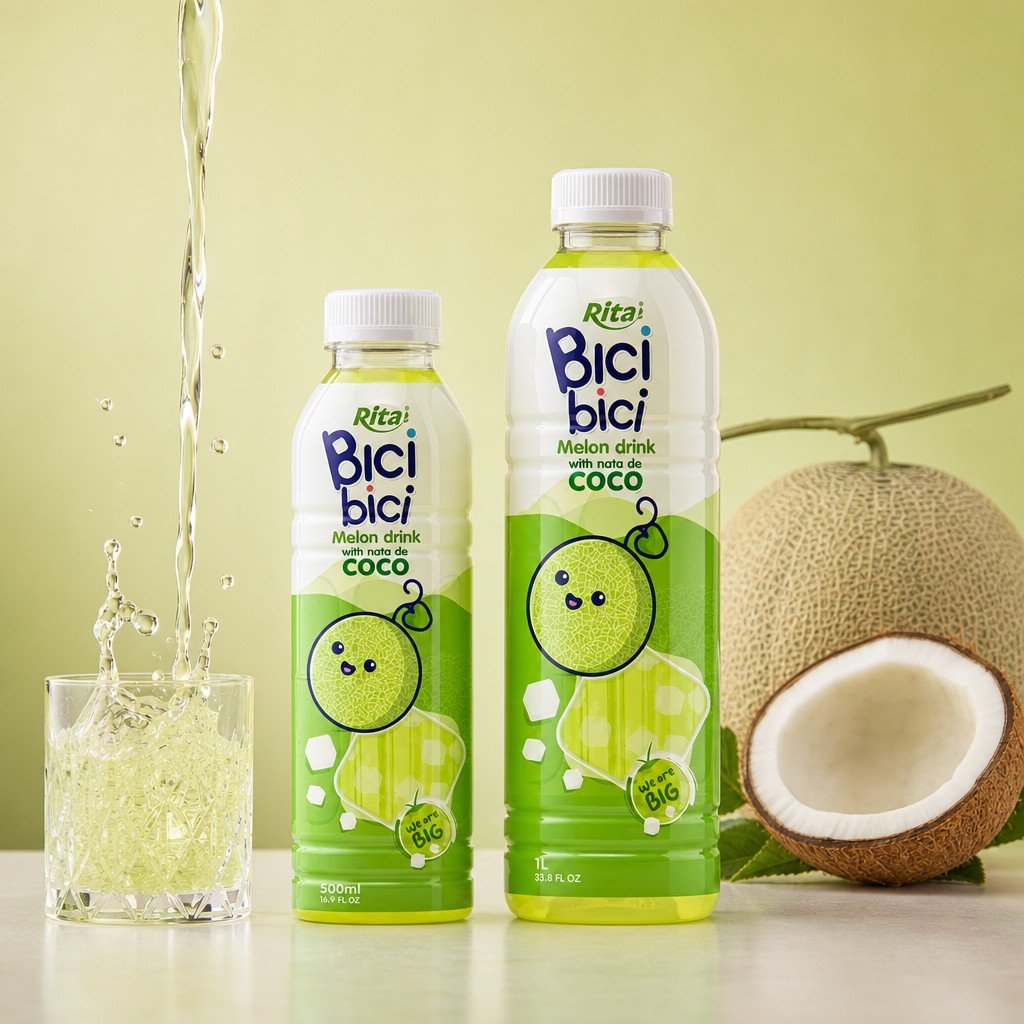
- The 500ml and 1L PET formats of the Rita Bici Bici Melon Drink with Nata de Coco cover both single-serve retail and family consumption occasions.
- RITA runs more than 50 automated production lines and ships over 1,200 containers monthly to more than 200 countries and territories.
- A certification stack including BRC, FSSC 22000, ISO, HACCP, GMP and Halal credentials supports entry into regulated retail environments.
- Upstream sourcing transparency and packaging efficiency are now decisive factors for buyers shortlisting new beverage SKUs.
Why The Melon Drink With Nata De Coco Appeals To Retailers
Textured beverages have quietly moved from novelty to shelf staple across several categories.
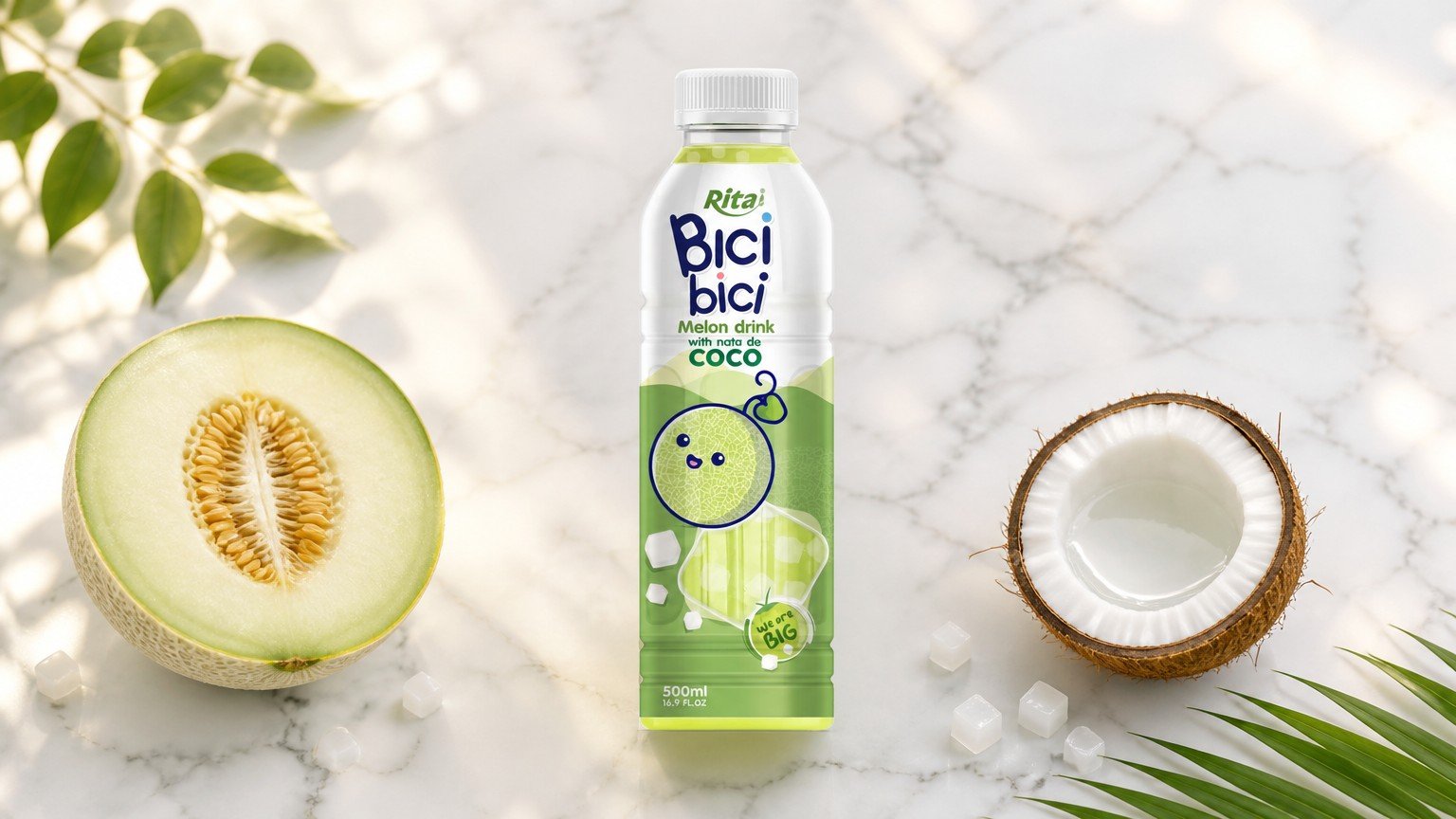
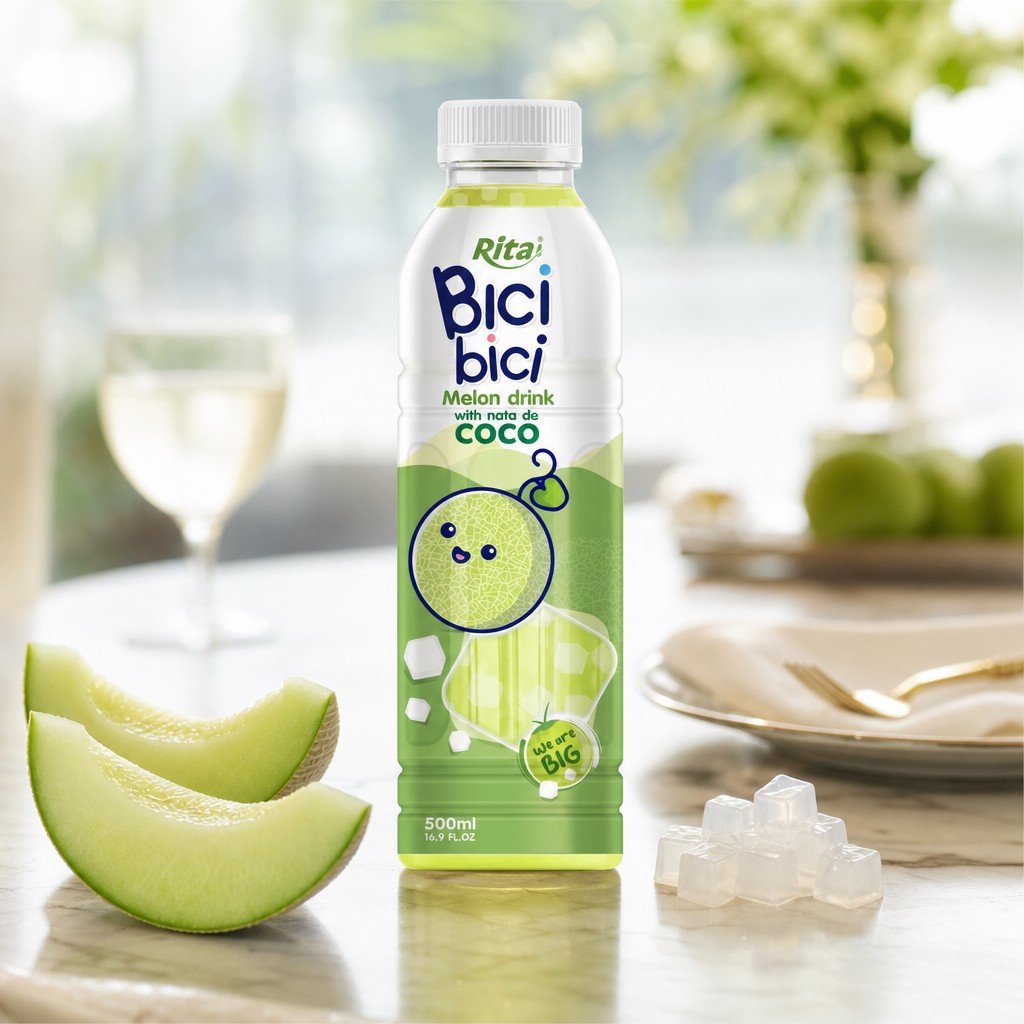
Across Germany, France, the Netherlands, Italy, Spain and the Nordics, meaning Sweden, Norway, Denmark and Finland, category buyers are looking for fruit drinks that offer more than a uniform liquid. The Rita Bici Bici Melon Drink with Nata de Coco answers that demand directly: a yellow-green, melon-forward liquid with chewy nata de coco cubes suspended throughout, presented in a bright PET bottle with a friendly fruit mascot and clear texture cues on the label. Shoppers identify both flavor and format at a glance, which matters in a category where shelf time is measured in seconds.
Part of the momentum is cultural. Bubble tea culture trained a broad consumer base, from teenagers to young adults, to expect chewable inclusions in cold drinks. That expectation now travels well beyond tea, pulling fruit juices and nata de coco beverages into the same consideration set at the point of purchase.
Occasion coverage strengthens the case further. The 500ml bottle suits lunch breaks, after-school refreshment, road trips and casual social moments, while the 1L variant supports family consumption at home. Because the drink is not carbonated and finishes cleanly rather than heavily, it fits dayparts where a sparkling soda would feel too aggressive. Importers can also place the SKU alongside the wider fruit drink catalog to build a coherent range instead of a single isolated listing.
For buyers, the practical question is whether a product can be described in one sentence on a planogram note. This one can: a light, juicy, textured fruit beverage with a cooling melon character and a playful chew. That clarity shortens internal approval cycles.
From Orchard To Bottle, Sourcing The Core Ingredients
Two raw materials define this product, and both depend on disciplined agricultural sourcing.
Nata de coco, the chewy cube at the center of the drinking experience, is a coconut-derived gel produced from coconut water. RITA's coconut supply relationships include the Ben Tre coconut farm network, where plantation-level quality control shapes the consistency of the raw material that eventually reaches the bottle. That consistency is what allows the same chew texture to appear batch after batch, an attribute that matters when a retailer reorders against a specification sheet.
The melon component follows a parallel logic. Fruit selection, ripeness windows and seasonal planning all feed into a flavor profile that stays sweet and aromatic with low acidity across production runs, so the sensory experience does not drift between shipments.
Regional growing areas supply much of this fruit base, and RITA documents its ingredient geography through the Mekong Delta raw material region, identified by the company as a high-quality source area for its beverage inputs. For buyers auditing provenance during supplier qualification, traceable upstream relationships are a practical advantage rather than a marketing line, and they simplify the documentation trail required at onboarding.
Footage from RITA's coconut sourcing operations offers a closer look at how raw material quality is tracked from plantation onward: https://www.youtube.com/watch?v=I7hlTL3FT_0
Export Capacity Behind The Melon Drink With Nata De Coco
Scale separates a promising sample from a repeatable shipment.
RITA operates more than 50 automated production lines and exports over 1,200 containers each month to more than 200 countries and territories. That infrastructure supports large-volume orders of the melon drink with nata de coco alongside private label programs for distributors who want their own branding on the same formulation. Advanced R&D capacity allows flavor and format adjustments before a contract is signed, which shortens the path from first inquiry to first container for a beverage export supplier serving multiple destinations at once.
A certification stack built for regulated markets
Retail demands documented compliance, and the product carries a portfolio that includes BRC, FSSC 22000, ISO, GMP, HACCP, SMETA, Kosher, Halal Jakim and Halal HCA-GCC. Those credentials are the paperwork equivalent of shelf access; without them, a beverage rarely reaches a buyer's shortlist, no matter how strong the concept is.
For a fruit drink positioned in the ready to drink juice segment, the combination of food safety management and social compliance auditing is especially relevant. Buyers in Germany and the Nordics routinely request evidence of both process control and responsible sourcing before onboarding a new supplier. RITA's broader fruit juice products catalog is built around that expectation, giving importers a single reference point across flavors, formats and documentation packages.
Format flexibility across the portfolio
Beyond PET, the manufacturer supplies beverages in aluminum cans, glass bottles and PP containers, so packaging can be matched to the distribution model rather than retrofitted later. Ambient grocery, refrigerated retail and travel retail each carry different handling demands, and having options early keeps landed-cost calculations honest.
The company's OEM service extends that flexibility to formulation and artwork, allowing a distributor to test a melon profile against local preference before committing to a full production schedule. It is a low-risk way to validate demand in a new channel.
Continuity, not capacity alone, wins contracts. Lead times, container scheduling and documentation discipline are where mid-size exporters are judged, and monthly volume gives buyers a buffer against seasonal spikes. When a retailer changes shelf specifications mid-year, a fruit drink manufacturer with multiple packaging lines can respond without reopening the entire commercial negotiation.
Industry Headlines Put Supply Chain Discipline In Focus
Recent headlines across the beverage sector underline how fragile operations can be.
Strikes announced at Diageo's Cameronbridge distillery signal ongoing workforce tension at one of the industry's largest production sites, while a US judge's dismissal of a lawsuit over the company's tequila offerings removes one legal variable from the picture. Meanwhile Scottish distiller Holyrood has paused operations temporarily, Australian Vintage plans to sell its Nepenthe cellar door and vineyard property, and Diageo is closing its Guinness Open Gate location in the United States.
The pattern is mixed: instability on one side, deliberate portfolio reshaping on the other. For beverage buyers, the takeaway is straightforward. Supplier continuity, documented processes and transparent sourcing carry more value during volatile periods than a low headline price, because a listing that cannot be replenished is not a listing at all.
Packaging Formats And Shelf Presence
In a crowded chiller door, packaging does most of the selling.
The 500ml and 1L PET bottle versions of the melon drink use a bright green color block with yellow-green accents, a cartoon melon character and illustrated nata de coco cubes that signal texture before the cap is opened. A white closure and a clear volume marking, 500ml or 16.9 FL OZ, keep the front panel uncluttered. The design reads as friendly rather than clinical, which supports impulse purchase among younger shoppers while still presenting as a credible fruit drink for family buyers.
Choosing between the two volumes
| Attribute | 500ml PET | 1L PET |
|---|---|---|
| Primary occasion | Single-serve, on-the-go | Shared, at-home consumption |
| Typical channel | Convenience, chiller, foodservice | Supermarket, wholesale |
| Portability | High | Moderate |
| Range role | Traffic driver | Volume driver |
PET is the pragmatic choice for this category. It is lightweight for freight, resistant to breakage in retail handling and widely accepted across European collection streams. For an importer calculating landed cost per unit, those properties matter as much as label design, and they reduce the risk profile of a first container order.
The visual system also travels well across markets. Because the flavor is communicated through color and illustration rather than long copy, the label requires minimal adaptation when it moves between languages, a small but real saving in artwork management for distributors running multi-country listings of the same SKU.
Frequently Asked Questions
What is melon drink with nata de coco?
It is a ready-to-drink fruit beverage that combines a sweet, aromatic melon flavor with chewy nata de coco cubes, available from RITA in 500ml and 1L PET bottles.
Which packaging formats are available for this product?
The primary formats are the 500ml PET bottle for single-serve occasions and the 1L PET bottle for family consumption, with additional container options such as aluminum cans, glass and PP available across the wider portfolio.
What certifications support export of the product?
The manufacturing base holds BRC, FSSC 22000, ISO, GMP, HACCP, SMETA, Kosher, Halal Jakim and Halal HCA-GCC certifications, covering food safety, process control and social compliance requirements.
Can the product be supplied under a private label?
Yes. RITA offers OEM and ODM programs that cover formulation, artwork and packaging specification, allowing distributors to adapt the melon profile and presentation to local channel requirements.
Related news items:
Newer news items:
- New EU Rules Reshape Europe's Ready-to-Drink Protein Coffee Market - 21/10/2026 07:44
- Honoring the Women of Rita Beverage on Vietnamese Women's Day 2026 - 21/10/2026 06:56
- Rita Beverage Team Building 2026: A Journey of Connection, Joy and Togetherness - 19/10/2026 06:24
- Ginger Milk Tea Peach Flavor Reshapes the RTD Tea Category - 15/10/2026 21:09
- Protein Water Demand Creates New Opportunities for Blueberry Drinks - 13/10/2026 20:51
Older news items:
- Glass Bottles and Coconut Milk Reshape the RTD Mocha Category - 08/10/2026 19:31
- Rita Team Building 2026: Ready for Hon Rom, Phan Thiet - 08/10/2026 04:54
- Sustainability Meets Flavor in Coco Sea Moss Coconut Water Launch - 07/10/2026 08:23
- How Purple Compound Juice Is Winning Over Shoppers - 07/10/2026 01:20
- From Arrival to Adventure: Rita’s Hòn Rơm Team Building Itinerary - 05/10/2026 18:00
 084 274 3784788

 No. 8, Thong Nhat Boulevard, Song Than 2 Industrial Park, Di An Ward, HCMC, Vietnam.