

How Purple Compound Juice Is Winning Over Shoppers

Consumer behavior in the modern beverage aisle is being rewritten by color, convenience and flavor curiosity, and purple compound juice has become one of the clearest signals of that shift. Retailers across Germany, France, the Netherlands, Italy, Spain and the Nordic markets report steady shopper interest in blends that look distinctive on shelf and travel easily in a bag.
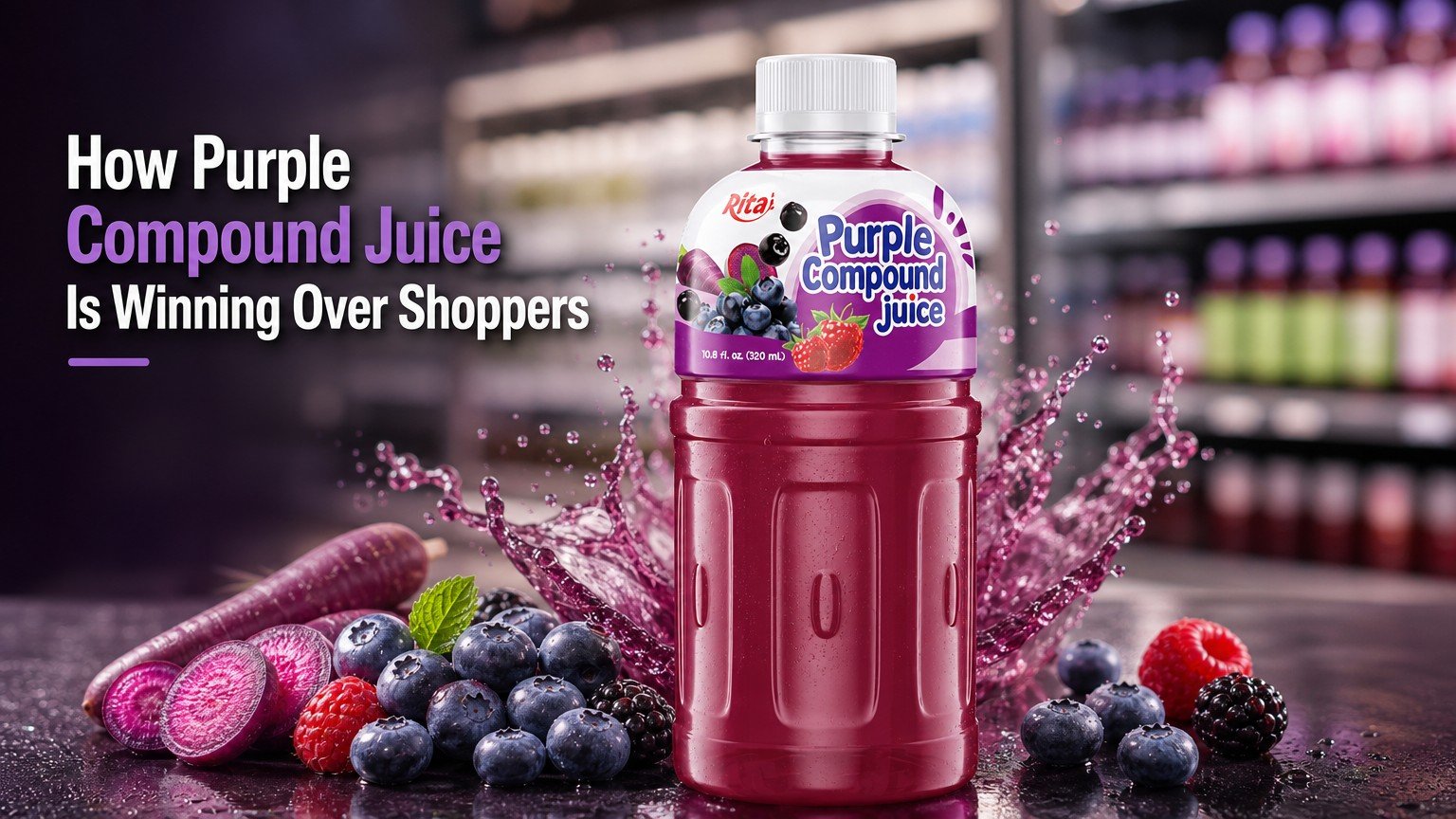
Against that backdrop, the Rita Purple Compound Juice 320ml PET bottle is drawing attention from buyers who want a premium-feeling drink paired with a straightforward formulation story.
Key Takeaways
- Shoppers judge beverages on visual impact and flavor layering before they judge the brand.
- Purple compound juice layers blueberries, raspberries and purple carrots into a tart opening and a smooth, slightly earthy finish.
- The 320ml PET bottle supports portability, fast cooling and efficient use of chilled shelf space.
- RITA operates more than 50 automated production lines and exports to over 200 countries and territories.
- European retailers are using multi-fruit blends to differentiate chilled categories and raise impulse purchases.
Shopper Behavior Is Reshaping European Juice Aisles
Convenience now decides more chilled beverage purchases than brand habit, and color does most of the persuading.
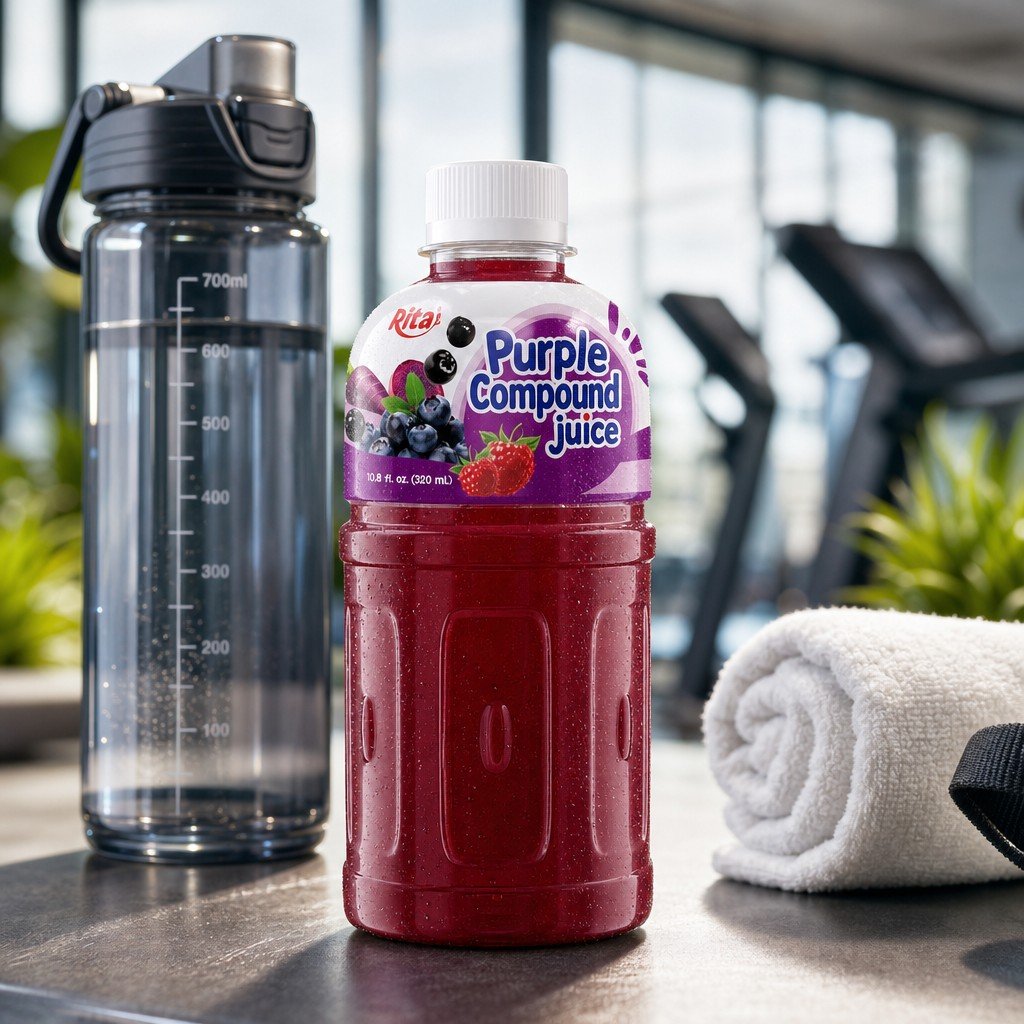
Across the European juice market, from Germany and France to the Netherlands, Italy, Spain and the Nordics, buyer interviews and category reviews point to the same pattern. Shoppers spend less time reading labels and more time scanning hue, format and portability as they walk the fixture. A bottle that fits a cup holder, chills quickly and stands out beside pale yellow and clear drinks is far more likely to be picked up on a first visit. That behavior has pushed compound blends, with their deeper and less familiar tone, into a visible position in refrigerated shelves.
The momentum behind purple compound juice also reflects a wider preference for complexity over predictability. A standard single-fruit drink offers one familiar note from start to finish, while a layered blend changes across the drinking experience. For a growing group of consumers, that progression, rather than a famous label, is the reason the same bottle returns to the basket a second and third time. Purple fruit juice variants in particular have benefited, because they carry a color story that single-juice competitors cannot easily copy.
Why Purple Compound Juice wins the first pickup
Shelf impact converts faster than brand familiarity in the chilled segment.
In practice, a shopper walking at speed registers the deep purple tone of the Rita Purple Compound Juice 320ml PET bottle before the brand name resolves, and that first impression produces a pick-up more often than neutral packaging does. Category planners have taken note. Several grocery and convenience formats now reserve eye-level positions for drinks with strong color contrast, on the view that visual variety slows the shopper down and raises the number of impulse additions per trip. Drinks with an unusual color also photograph well, which extends their reach beyond the store through social sharing and menu-style content created by cafés and bars.
Trial, however, is only half the equation. Retailers watch repeat rate just as closely, because a colorful listing that does not come back drains the space allocated to it. Buyers who have tested layered blends report that the tart-to-smooth progression keeps the product interesting across multiple occasions, which is the behavior that protects a listing through the next range review.
Inside the Purple Compound Juice Flavor Profile
The blend was built around a deliberate taste arc rather than one dominant note.
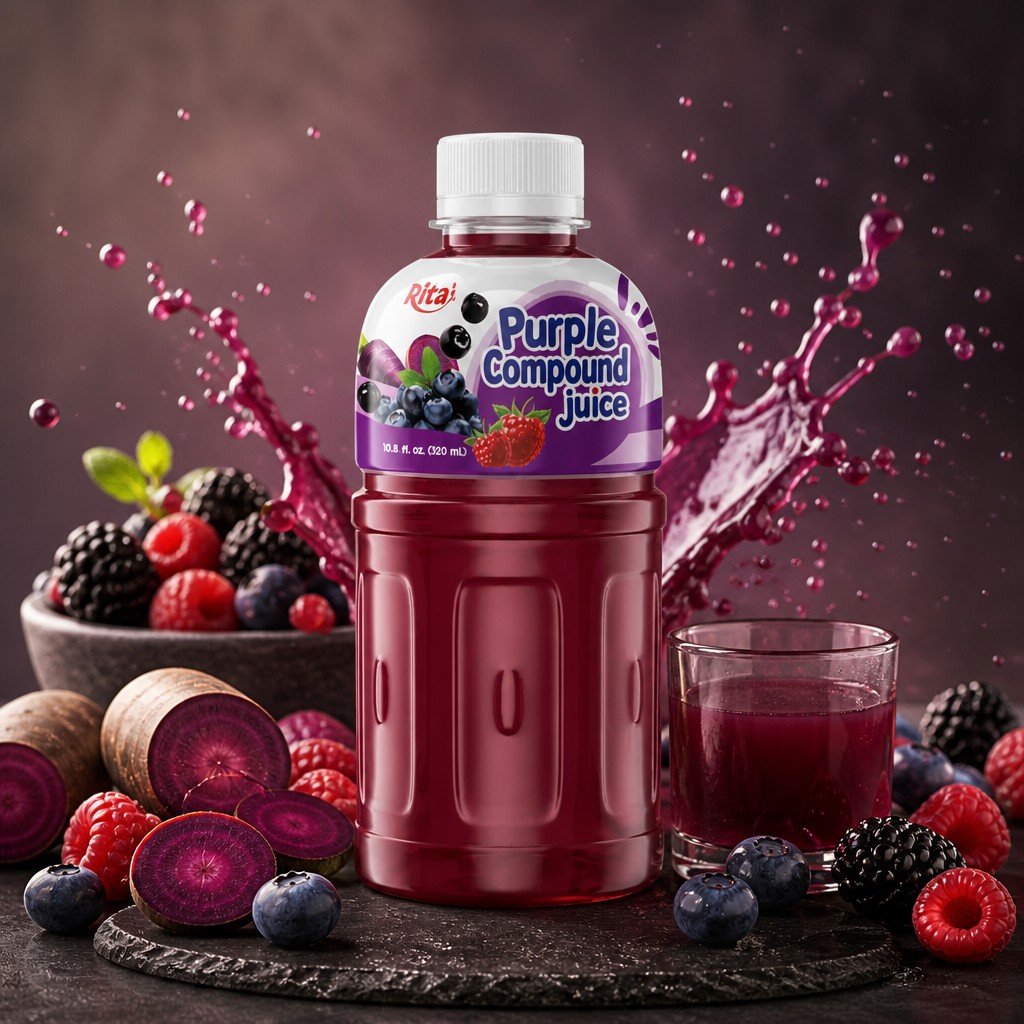
The formulation combines blueberries, raspberries and purple carrots, with dark berry components visible on the label as well. It opens with a bold, tart berry character, moves through a sweeter middle and closes on a smooth, slightly earthy finish drawn from the root component. That sequence gives the drink a longer tasting curve than a conventional single-flavor juice, which is exactly what flavor-curious consumers say they look for when they try something new. Berry juice launch activity has multiplied in recent seasons, yet most entries still rely on a single headline fruit, leaving the compound approach comparatively uncrowded.
The wider fruit juice product range from the manufacturer follows the same principle, pairing familiar ingredients with unexpected combinations so that a listing can cover several shopper moods without overextending a range.
From tart berry opening to an earthy finish
Sequential flavor design has migrated from craft drinks into mainstream ready-to-drink products.
Blending tart red fruit with sweet dark berries and an earthy vegetable base creates contrast that keeps the tasting experience engaged without relying on heavy sweetness. Mixologists and café operators have picked up on the same property, using purple blends to add depth to mocktails, specialty teas and layered iced drinks where color separation matters as much as taste. The drink is equally at home poured over ice at home or served chilled straight from the bottle, which widens the occasions on which it can be listed and simplifies the training staff need before a launch.
Packaging Cues and the On-the-Go Shopper
Format decides whether a drink leaves the shelf with a commuter, a student or a gym-goer.
Among PET bottle beverage formats, the 320ml option has become a default for single-serve chilled distribution, and this one is shaped for exactly that job. It is lightweight, ergonomically designed for a comfortable grip and sized to sit in standard cup holders, lunch boxes and bag pockets, making it a natural on-the-go drink for daily routines. Advanced packaging technology preserves the natural purple hue, aroma and taste from the filling stage to the moment the cap is opened, so the product reaching the consumer matches the product that was designed. A larger 490ml can variant is available for shoppers who prefer a bigger pour or a different format.
For retailers, the same bottle delivers a practical advantage on the fixture. Its compact footprint allows dense facing, rapid cooling in chilled cabinets and efficient use of shelf space, while the transparent body lets the color of the liquid act as its own merchandising asset. Recyclable PET also matches the packaging expectations that most European grocery chains now write into supplier requirements, which shortens the compliance conversation during range onboarding.
| Format | Typical consumption moment | Retail advantage |
|---|---|---|
| 320ml PET bottle | Commute, desk, gym bag | Fast cooling, dense shelf facing, cup-holder fit |
| 490ml can | Longer break or shared occasion | Wide opening, strong chill performance |
| Mixed multipack | Weekly shop and household stocking | Higher basket value, fewer replenishment trips |
Where the Purple Blend Comes From
Ingredient sourcing sits directly behind the consistency of the final taste.
The root and berry components of the blend are selected from established growing regions, with purple carrots, a core part of the color and the earthy close, drawn from quality raw material areas such as the Mekong Delta sourcing region, where grower relationships and incoming raw material checks are maintained throughout the year so that each production run starts from comparable input quality.
Field footage from the sourcing region shows the growing environment behind those raw materials: https://www.youtube.com/watch?v=jiBixXjeG8A
Beverage Categories Under Pressure While Juice Demand Holds
Alcohol categories have had a turbulent stretch, and chilled juice has been comparatively calm.
Recent headlines underline how quickly the wider drinks landscape can shift. Diageo's Cameronbridge distillery was hit by further industrial action, a US judge dismissed the company's tequila lawsuit, Scottish producer Holyrood paused production, Australian Vintage moved to sell its Nepenthe cellar door and vineyard, and Diageo confirmed plans to close its Guinness Open Gate site in the United States. Each item points to cost pressure, portfolio pruning or supply disruption inside the spirits and wine segments.
For beverage buyers, that volatility makes a stable ready-to-drink juice line a useful counterweight. Non-alcoholic chilled drinks continue to show predictable weekly movement in retail, and blends with a clear visual identity tend to hold their position when listings are reviewed. The purple compound juice proposition fits that logic well, offering a distinctive shelf presence without depending on seasonal promotion cycles or the pricing swings that have unsettled neighboring categories.
From Consumer Trend to Trade Opportunity
Turning shopper interest into repeatable supply is where most categories are actually won.
RITA Food and Drink Co., Ltd, established in 2004, has built its business around exactly this kind of volume work. The company runs more than 50 automated production lines, ships over 1,200 containers a month and supplies brands in more than 200 countries and territories, giving European importers a partner that can move a listing from a first container to steady replenishment without renegotiating capacity. Its fruit drink range covers the formats buyers request most often, including PET bottles, aluminum cans and glass, and the RITA beverage export team handles documentation for each destination.
Quality documentation is already in place for retail onboarding: BRC, FSSC 22000, Halal Jakim, Halal HCA-GCC, Kosher, ISO, GMP, HACCP and SMETA. Private label and OEM/ODM programs are available for buyers who want a compound blend under their own brand, with formulation, label design and format decisions handled through the company's research and development team, while existing recipes can be adapted to a target price point.
Buyers evaluating the shelf-ready option can review the Rita Purple Compound Juice 320ml PET bottle listing directly for pack configurations, sampling details and chilled distribution guidance. For range planners, that means the decision can be assessed on commercial terms rather than on promise alone.
Frequently Asked Questions
What is Rita Purple Compound Juice?
Rita Purple Compound Juice is a ready-to-drink blend sold in a 320ml PET bottle, combining blueberries, raspberries and purple carrots. It opens with a tart berry note, moves through a sweeter middle and finishes smooth with a slightly earthy tone.
Why do retailers stock compound blends instead of single-fruit juices?
Compound blends give a fixture color variety and a layered taste that encourages repeat purchase, while the deeper purple hue attracts attention in a chilled aisle dominated by pale yellow and clear beverages.
What makes the 320ml PET bottle format practical for stores?
The compact bottle allows dense shelf facing, cools quickly in chilled cabinets, fits standard cup holders and is recyclable, which aligns with the packaging requirements many European grocery chains set for suppliers.
Can the drink be supplied under a private label?
Yes. RITA operates OEM and ODM programs with in-house research and development, so formulation, label and pack format can be adapted to a buyer's brand while meeting the certifications required for the destination market.
Which regions does the manufacturer export to?
RITA supplies brands in more than 200 countries and territories, including buyers across Germany, France, the Netherlands, Italy, Spain and the Nordic markets, supported by BRC, FSSC 22000, Halal, Kosher, ISO, GMP, HACCP and SMETA certifications.
Related news items:
Newer news items:
- Protein Water Demand Creates New Opportunities for Blueberry Drinks - 13/10/2026 20:51
- Supply Chain Spotlight On The Melon Drink With Nata De Coco - 11/10/2026 22:50
- Glass Bottles and Coconut Milk Reshape the RTD Mocha Category - 08/10/2026 19:31
- Rita Team Building 2026: Ready for Hon Rom, Phan Thiet - 08/10/2026 04:54
- Sustainability Meets Flavor in Coco Sea Moss Coconut Water Launch - 07/10/2026 08:23
Older news items:
- From Arrival to Adventure: Rita’s Hòn Rơm Team Building Itinerary - 05/10/2026 18:00
- Yuzu Peach Electrolyte Water Drink Sees Growing Demand Across Europe - 05/10/2026 06:40
- Vietnam's Yuzu Electrolyte Water Targets Europe's Low-Sugar Aisle - 02/10/2026 05:47
- RITA's Angry Water Launches Sparkling Coconut Protein in Europe - 29/09/2026 07:49
- How Yuzu Electrolyte Water Is Reshaping Consumer Hydration Choices - 29/09/2026 07:21
 084 274 3784788

 No. 8, Thong Nhat Boulevard, Song Than 2 Industrial Park, Di An Ward, HCMC, Vietnam.