
Sustainability Meets Flavor in Coco Sea Moss Coconut Water Launch

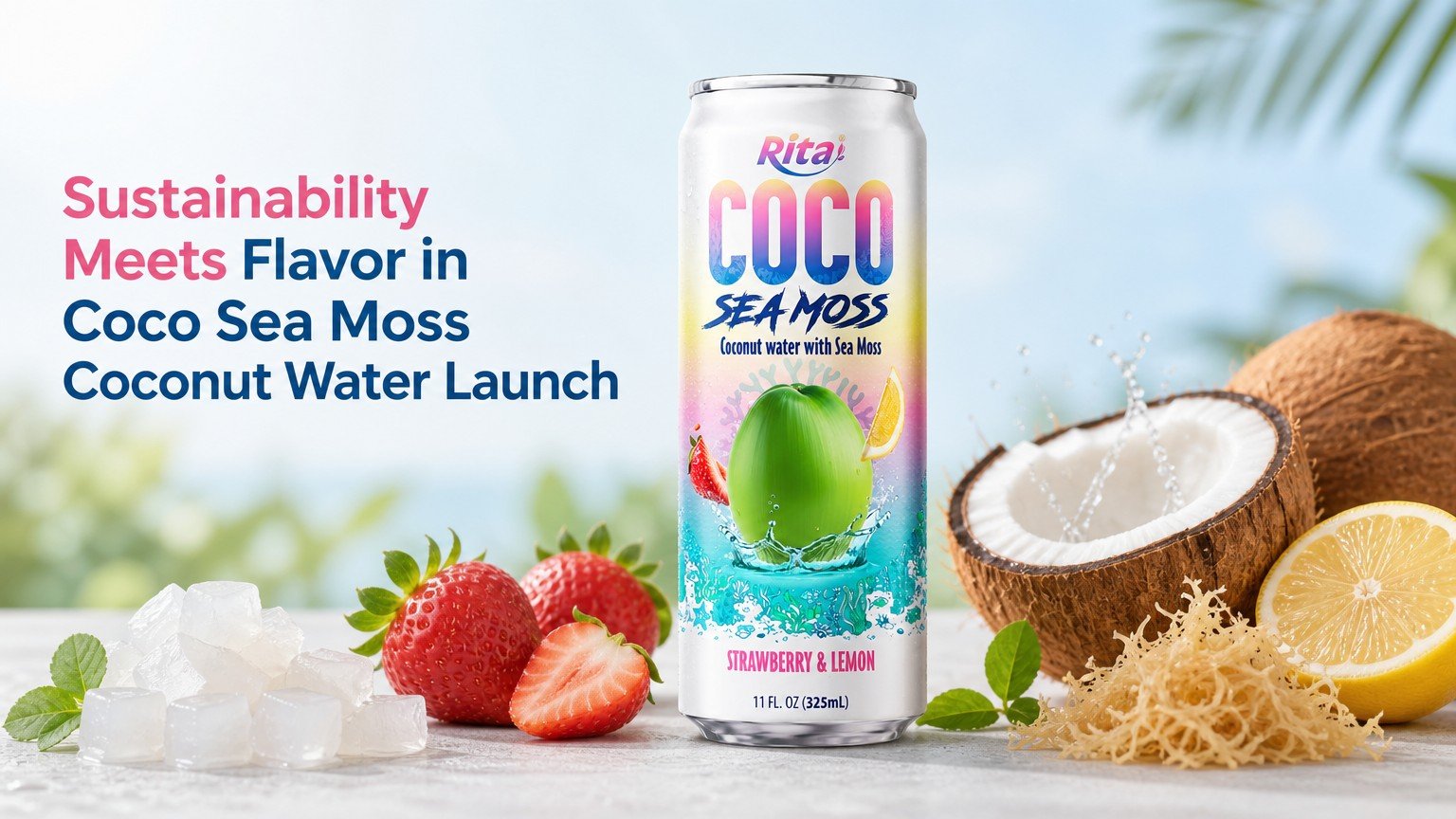
European beverage aisles are being reshaped by a quieter demand — shoppers want drinks that taste interesting, travel light and leave a lighter footprint. That combination has pushed coconut water with sea moss blends from novelty conversation to everyday chiller staple, and the newest entrant from RITA, Coco Sea Moss Coconut Water with Sea Moss Strawberry and Lemon Flavor 325ml Sleek Can, shows how a tropical base, a marine ingredient and two familiar fruit notes can sit inside a recyclable aluminum format built for modern retail.
Key Takeaways
- Sustainability has shifted from packaging footnote to purchase criterion for beverage buyers in Germany, France, the Netherlands, Italy, Spain and the Nordic markets.
- The 325ml sleek can pairs coconut water with sea moss, strawberry and lemon in a lightweight aluminum format compatible with established metal recycling streams.
- Specifications — 5.0 ± 0.2 Brix, 3.7 ± 0.2 pH, roughly 20 kcal per 100ml — position the drink for flavor-seeking, calorie-conscious shoppers.
- RITA Food and Drink Co., Ltd operates 50+ automated production lines and ships more than 1,200 containers per month to 200+ countries and territories.
- Certifications spanning BRC, FSSC 22000, ISO, HACCP, GMP and SMETA support retail listings and private label programs.
Sustainability Becomes a Purchase Driver for European Beverage Shoppers
Sustainability is no longer a footnote on the shelf. For many category managers it has become a shortlist condition.
Retail buyers across Germany, France, the Netherlands, Italy, Spain, Sweden, Norway, Denmark and Finland increasingly weigh sourcing documents, pack format and transport efficiency alongside taste and price. The European beverage market has moved quickly on this point: suppliers that can document recyclability, weight reduction and traceable inputs are finding it easier to open conversations with category managers. For manufacturers, the shift has turned sustainable beverage packaging from a cost line into a positioning asset that shows up in tender criteria rather than brand brochures.
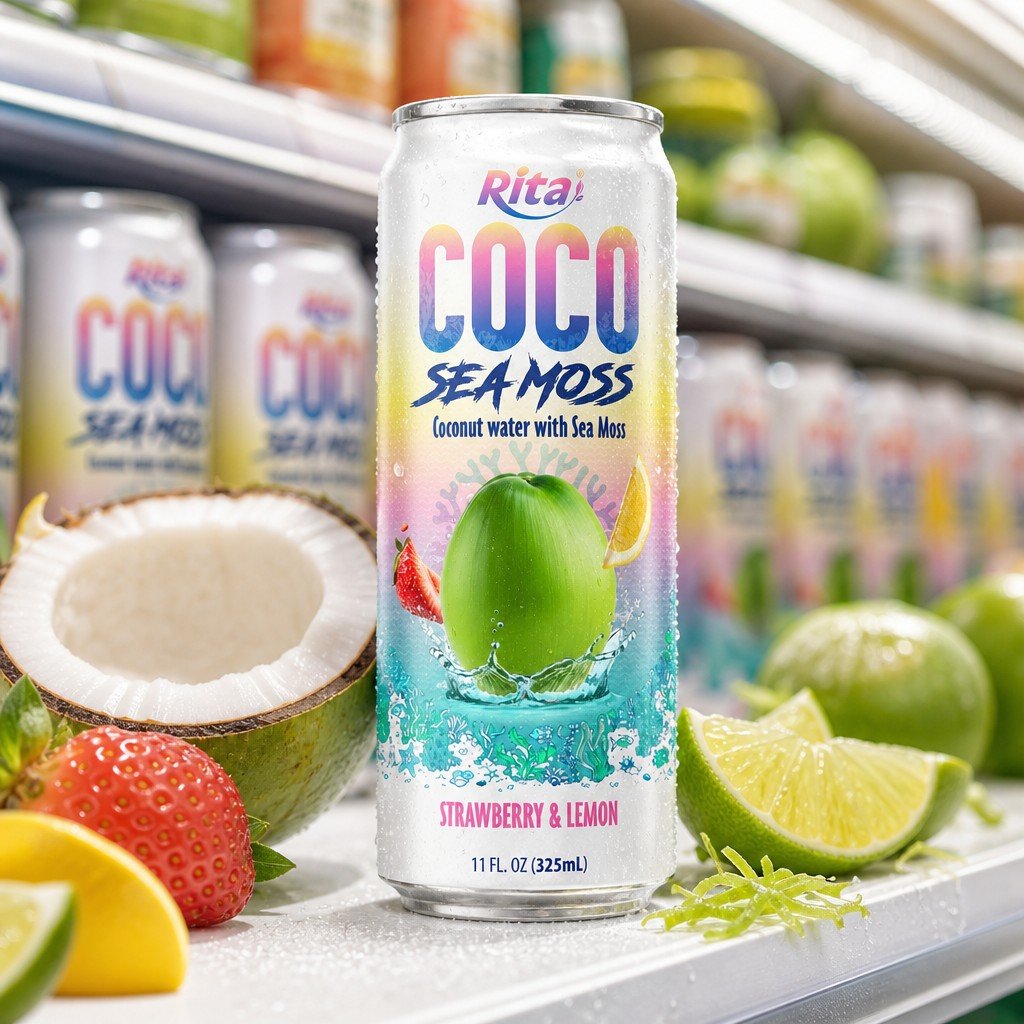
The Coco Sea Moss Coconut Water 325ml sleek can speaks directly to that checklist. Its aluminum body is light enough to reduce case weight on mixed pallets, rigid enough to protect flavor integrity through ambient distribution, and compatible with the metal collection streams already present in most European municipal systems. Full packaging, composition and export details are published on the Coco Sea Moss Coconut Water product page, where buyers can review the 325ml format specification alongside label artwork. The positioning is straightforward: a recyclable can format that carries a tropical flavor story without adding packaging complexity to an established retail program.
What Buyers Screen for in a Sustainable Can Format
Category managers rarely ask for slogans. They ask for figures they can paste into a listing form.
- Recyclability evidence for the pack material and the label finish
- Unit and case weight, with numbers usable for transport planning
- Ambient shelf life suitable for cross-border distribution
- Clear serving volume and composition figures printed on-pack
- Certification scope covering food safety and ethical auditing
A 325ml serving answers the portion question neatly for single-serve chiller placement, while the sleek silhouette fits standard can dispensers and fridge door shelves. For retailers running own-label tropical ranges, that combination of format familiarity and an unusual flavor proposition lowers the merchandising risk of listing a new line.
Flavor Architecture of Coconut Water With Sea Moss
The drink is built in four layers, and each layer has a clear job in the sip.
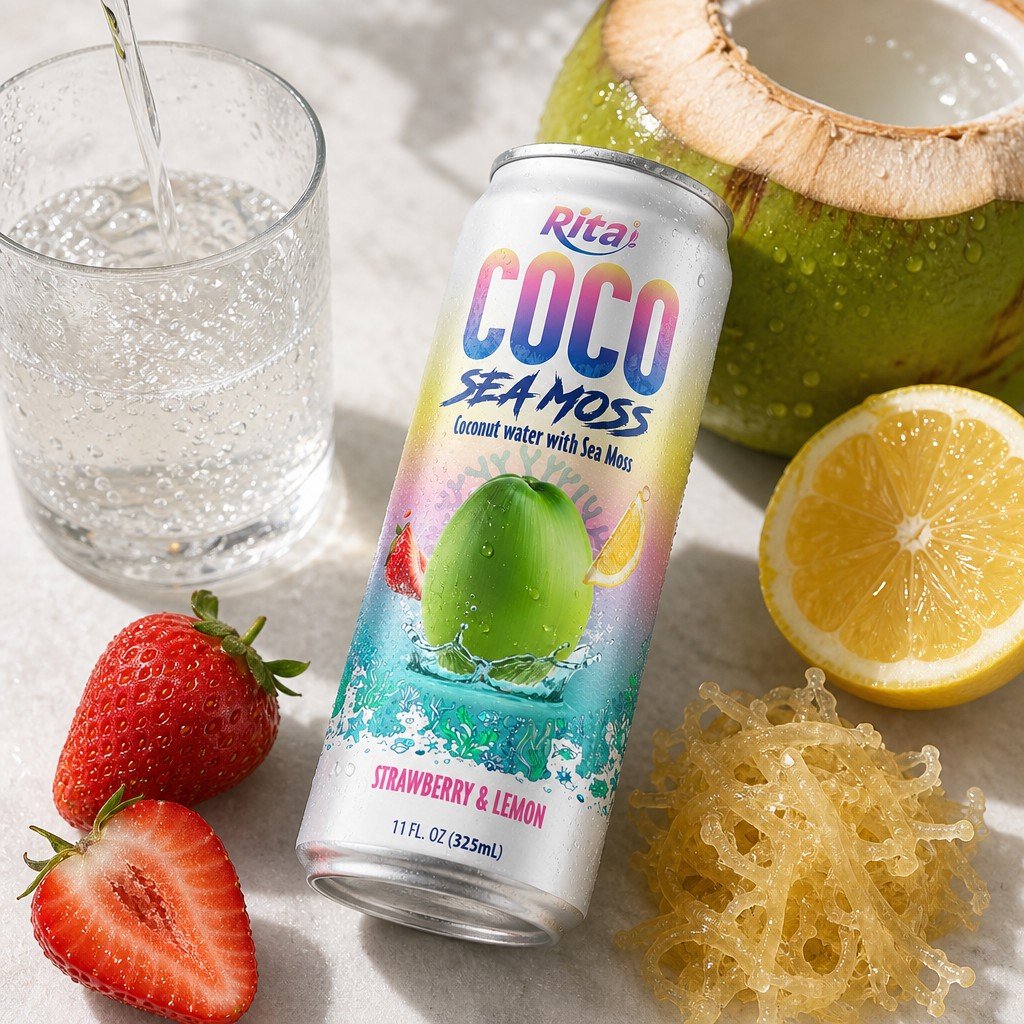
It opens with the clean, slightly nutty sweetness of coconut water, the base most drinkers recognise immediately. Sea moss extract — a red algae harvested from the Atlantic — follows with a delicate marine salinity and natural gelling properties that give the liquid a smoother mouthfeel without artificial thickeners. Juicy strawberry arrives in the middle of the profile, then a zesty lemon lift closes the finish, keeping the taste bright rather than syrupy. Read as a sequence, the drink presents as tropical first, coastal second, fruit-forward third — a progression that keeps repeat sipping interesting rather than repetitive. As a tropical coconut water proposition, it differentiates on aroma before it differentiates on shelf talkers.
| Specification | Value |
|---|---|
| Format | 325ml sleek aluminum can |
| Sweetness (Brix) | 5.0 ± 0.2 |
| Acidity (pH) | 3.7 ± 0.2 |
| Energy per 100ml | Approximately 20 kcal |
| Fat per 100ml | 0 g |
| Potassium per 100ml | 134 mg |
| Sodium | Negligible |
Source: product specification sheet, RITA Food and Drink Co., Ltd.
A 5.0 Brix reading places the drink in the mildly sweet tier — noticeably lighter than many flavored coconut waters already on shelf, which tends to appeal to shoppers who read labels before they buy. The 3.7 pH keeps acidity balanced against the fruit notes, so strawberry and lemon read as fresh rather than sharp. At roughly 20 kcal per 100ml with zero fat, the composition is positioned for calorie-conscious consumers who want flavor variety without a heavy, mouth-coating finish.
This formulation sits inside RITA's wider coconut products catalog, which groups coconut water drinks, coconut milk variants and coconut-based mixes under one sourcing umbrella. Retailers and distributors building a tropical block can pair the coconut water with sea moss line with adjacent berry and citrus blends from the fruit juice products range, giving a shelf set that moves from classic coconut to marine-infused fruit to more conventional juice propositions. The complete Coco Sea Moss Coconut Water listing remains available through the product page linked above, including case configuration details for procurement teams.
Why Coconut Water With Sea Moss Sits Well in Retail Chillers
Small formats turn faster in chillers, and faster turns justify better shelf positions.
The sleek can also photographs cleanly, which matters as more beverage discovery happens on phones before it happens in store. A white label with a gradient design — green coconut, strawberry slice, lemon wedge, a blue water splash and an underwater coral motif — gives the pack a consistent visual hook across print, shelf and social placements, and the same artwork direction can be adapted for private label variants without redesigning the range.
From Orchard to Can, Where the Raw Materials Come From
Traceability starts long before a can is filled.
Coconut water for the blend is drawn from RITA's established sourcing network in Vietnam, where raw material quality is checked at intake before processing. Strawberry and lemon inputs are selected for aroma and colour consistency, since both carry significant weight in the final profile of a two-fruit recipe. Sea moss follows a separate route through marine harvesting partners, adding an ingredient narrative that few coconut water brands are able to tell.
Coconut sourcing is anchored in the Ben Tre coconut farm programme, a plantation-to-processing chain that documents variety, maturity and handling before the nuts move into beverage production, giving buyers a documented origin story for the base ingredient.
Beyond coconuts, the company draws on the Mekong Delta raw material area for a broad range of high-quality agricultural inputs used across its portfolio, which simplifies origin documentation for fruit-based lines destined for export.
Field footage from the sourcing region shows the plantation environment behind these ingredients: https://www.youtube.com/watch?v=I7hlTL3FT_0
Export Capacity, Certifications and the Market Outlook
A sustainable pack only matters if it can reach shelves consistently.
That is where manufacturing scale enters the conversation. RITA Food and Drink Co., Ltd, established in 2004, operates more than 50 automated production lines and functions as a beverage export supplier shipping over 1,200 containers per month to more than 200 countries and territories. The Coco Sea Moss Coconut Water 325ml sleek can is produced under a certification stack that includes BRC, FSSC 22000, Halal Jakim, Halal HCA-GCC, Kosher, ISO, GMP, HACCP and SMETA, covering food safety, quality management and ethical auditing. For European procurement teams, that list shortens due diligence considerably; for item-level figures, the Coco Sea Moss Coconut Water product page remains the reference.
The wider drinks trade is also moving capital in directions that favour alcohol-free formats. Anora finalized a Bacardi distribution deal covering Sweden and Norway, while Constellation Brands made a further investment in the social tonic brand Hiyo — both signals that companies are placing fresh bets on moderated drinking occasions. Meanwhile, the NABCA has reported ongoing weakness in U.S. spirits sales, a reading that keeps attention on softer alternatives in retail planning, and even established players are not immune, with Scottish distiller GlenWyvis entering administration.
For buyers interested in private label coconut water, RITA's OEM beverage manufacturing and ODM service model supports recipe adjustment, label redesign, can size changes and mixed-container shipment planning. Artwork, case configuration and order minimums can be tailored to a retailer's existing tropical range, which lowers the barrier to adding a sea moss variant without rebuilding a category plan from scratch. Businesses exploring that route can review the service program for scope, lead times and documentation requirements before committing to a first production run.
Frequently Asked Questions
What is coconut water with sea moss in the Coco Sea Moss 325ml can?
It is a canned drink from RITA that blends a coconut water base with sea moss extract, strawberry and lemon. The flavor opens with the clean sweetness of coconut water, follows with a delicate marine salinity from sea moss, then finishes with strawberry and a zesty lemon lift.
What are the key product specifications?
The drink is filled in a 325ml sleek aluminum can with a Brix level of 5.0 ± 0.2 and a pH of 3.7 ± 0.2. Composition per 100ml is approximately 20 kcal, 0 g fat, 134 mg potassium and negligible sodium.
Which certifications support export of this product?
Production sits under BRC, FSSC 22000, Halal Jakim, Halal HCA-GCC, Kosher, ISO, GMP, HACCP and SMETA, covering food safety, quality management and ethical auditing for international distribution.
Can the recipe and label be adapted for private label programs?
Yes. RITA works through OEM and ODM service models that allow recipe adjustments, label artwork changes, can size options and mixed-container shipment planning for retail and foodservice buyers.
How does the packaging support sustainability goals?
The 325ml sleek can is lightweight for transport and compatible with the metal recycling streams widely available across European collection systems, while the compact serving size supports portion-controlled single-serve placement.
Related news items:
Newer news items:
- Ginger Milk Tea Peach Flavor Reshapes the RTD Tea Category - 15/10/2026 21:09
- Protein Water Demand Creates New Opportunities for Blueberry Drinks - 13/10/2026 20:51
- Supply Chain Spotlight On The Melon Drink With Nata De Coco - 11/10/2026 22:50
- Glass Bottles and Coconut Milk Reshape the RTD Mocha Category - 08/10/2026 19:31
- Rita Team Building 2026: Ready for Hon Rom, Phan Thiet - 08/10/2026 04:54
Older news items:
- How Purple Compound Juice Is Winning Over Shoppers - 07/10/2026 01:20
- From Arrival to Adventure: Rita’s Hòn Rơm Team Building Itinerary - 05/10/2026 18:00
- Yuzu Peach Electrolyte Water Drink Sees Growing Demand Across Europe - 05/10/2026 06:40
- Vietnam's Yuzu Electrolyte Water Targets Europe's Low-Sugar Aisle - 02/10/2026 05:47
- RITA's Angry Water Launches Sparkling Coconut Protein in Europe - 29/09/2026 07:49
 084 274 3784788

 No. 8, Thong Nhat Boulevard, Song Than 2 Industrial Park, Di An Ward, HCMC, Vietnam.