
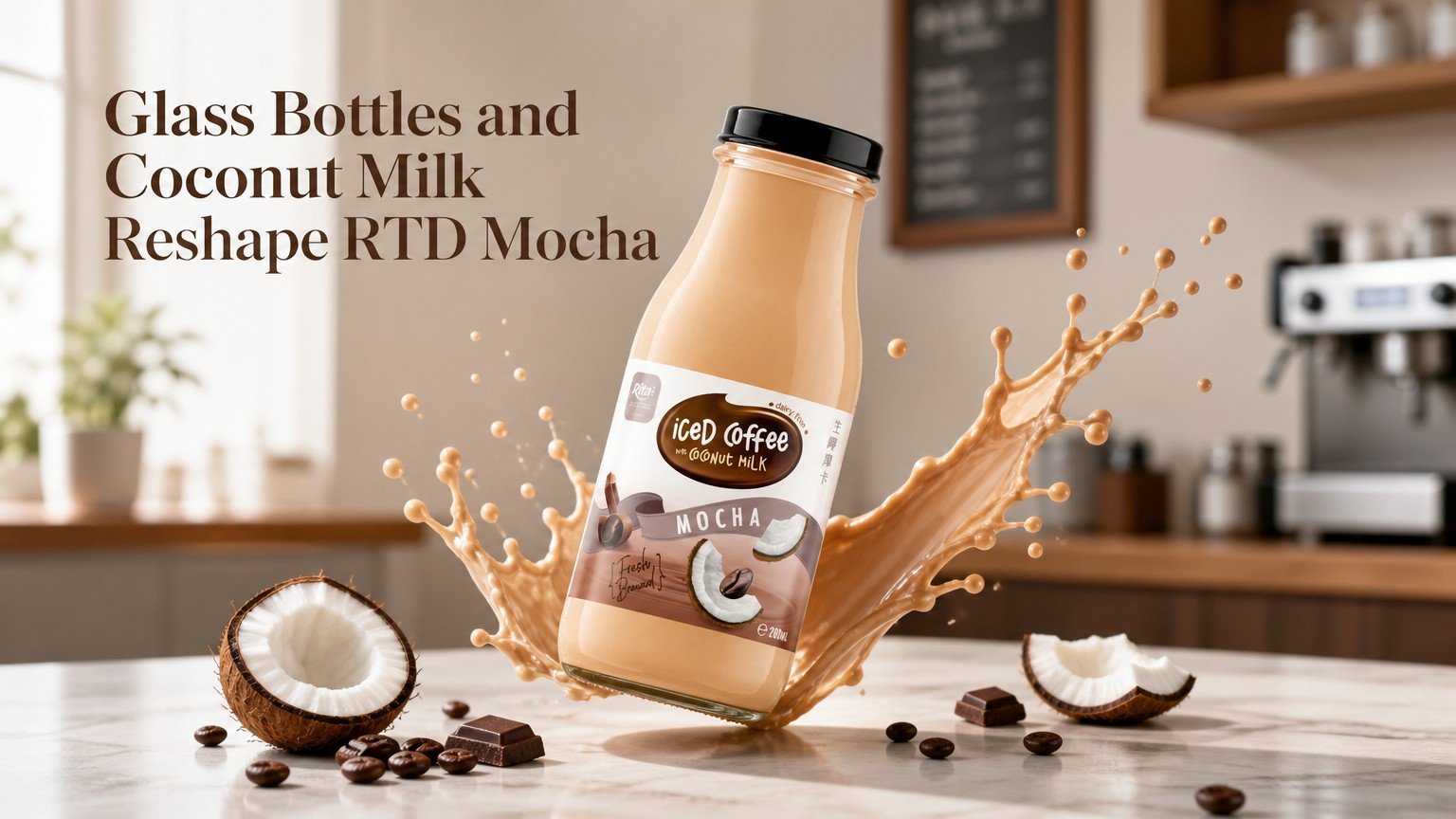
Glass Bottles and Coconut Milk Reshape the RTD Mocha Category

The ready-to-drink coffee aisle is undergoing a quiet material shift. Across premium retail shelves in Germany, France, the Netherlands, Italy, Spain, and the Nordic markets of Sweden, Norway, Denmark, and Finland, consumers are encountering a new generation of mocha beverages that pair plant-based creaminess with packaging designed for long-term flavor stability.
At the center of this movement sits the Rita Iced Coffee with Coconut Milk Mocha Flavor 280ml Glass Bottle, a product that illustrates how sustainability considerations, ingredient transparency, and premium positioning are converging in the European RTD coffee market.
Key Takeaways
- European RTD coffee demand is increasingly shaped by plant-based formulations and packaging choices that support flavor integrity.
- Glass bottle packaging offers recyclability advantages and protects cocoa and coffee aromatics over a 24-month shelf life.
- Coconut milk replaces dairy cream, delivering a lighter mocha profile aligned with evolving consumer preferences.
- RITA Food and Drink Co., Ltd provides OEM and ODM capabilities for brands seeking private label RTD coffee solutions.
- Certifications including BRC, FSSC 22000, Halal, Kosher, ISO, GMP, HACCP, and SMETA support export compliance across 200+ countries and territories.
Why Packaging Choice Now Defines Premium RTD Coffee
Packaging has become a visible sustainability signal for European shoppers.
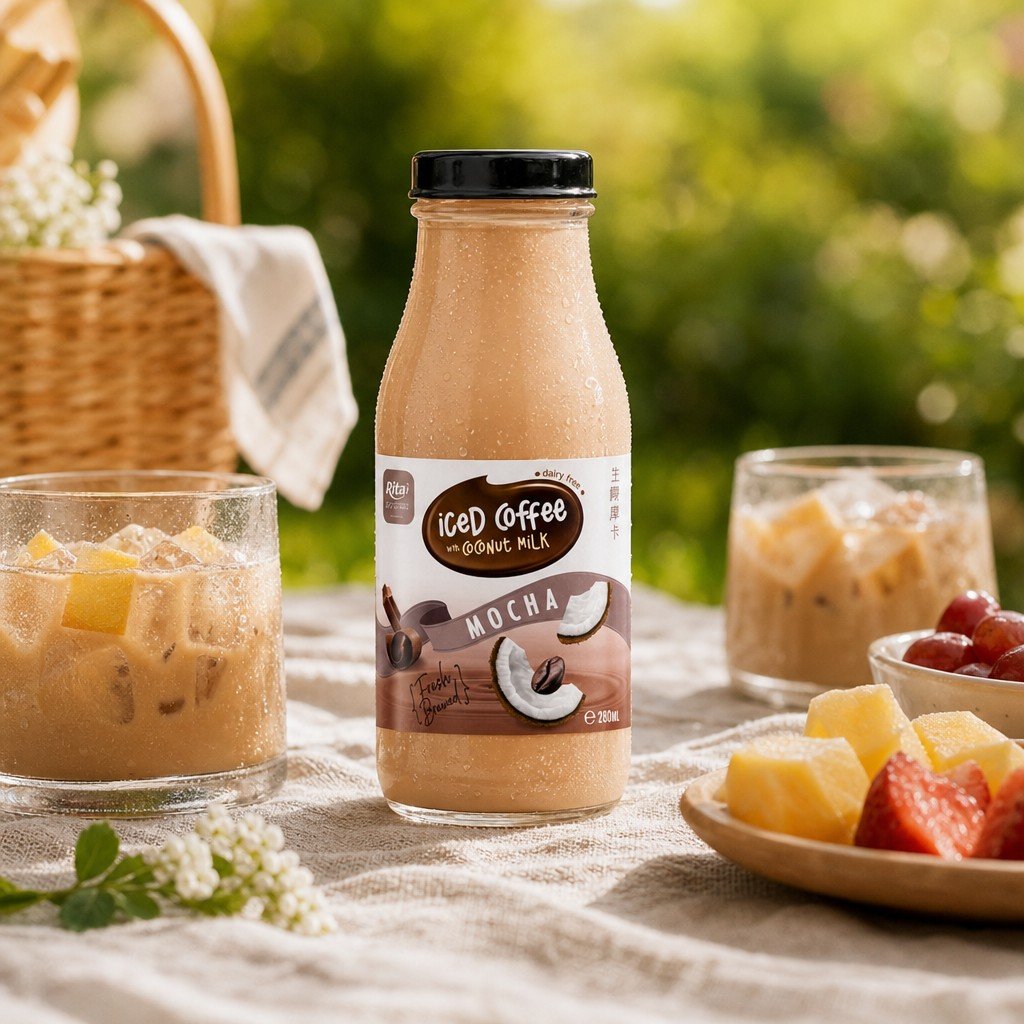
In markets where deposit-return schemes and circular-economy targets are well established, glass is frequently read as a premium, recyclable format. The Rita Iced Coffee with Coconut Milk Mocha 280ml Glass Bottle leverages this perception while also serving a functional purpose. Glass limits oxygen ingress, which helps preserve the aromatic profile of freshly brewed coffee and the depth of cocoa solids over an extended shelf life of 24 months. For importers and retail buyers evaluating shelf-stable mocha beverages, that combination of visual appeal and flavor protection is a meaningful differentiator.
Material Circularity and Consumer Perception
Recyclability rates for container glass in Europe consistently outperform many polymer alternatives, and consumers increasingly associate glass with reusability. Retailers stocking premium chilled beverages have noted that glass bottles stand out in refrigerated display cases, supporting "grab-and-go" positioning without additional secondary packaging. This alignment between material choice and merchandising strategy makes glass an attractive option for brands targeting environmentally attentive buyers in the Nordics and Western Europe.
Beyond perception, glass inertness prevents flavor migration. Cocoa and coffee compounds interact with certain plastic substrates over time, potentially flattening the taste profile. By selecting glass, manufacturers protect the multi-layered chocolate-coconut character that defines the product experience.
Coconut Milk as the New Mocha Standard
Dairy-free mocha is moving from niche to mainstream.
The formulation of Rita Iced Coffee with Coconut Milk Mocha replaces heavy dairy creams with coconut milk, creating a lighter mouthfeel while retaining the richness consumers expect from a chocolate-coffee blend. This shift reflects a broader European trend toward plant-based beverage options, particularly among younger coffee drinkers who view dairy-free choices as part of their everyday purchasing pattern rather than a specialty request. The result is a mocha that feels indulgent without the density associated with traditional cream-based recipes.
Flavor Architecture Without Dairy
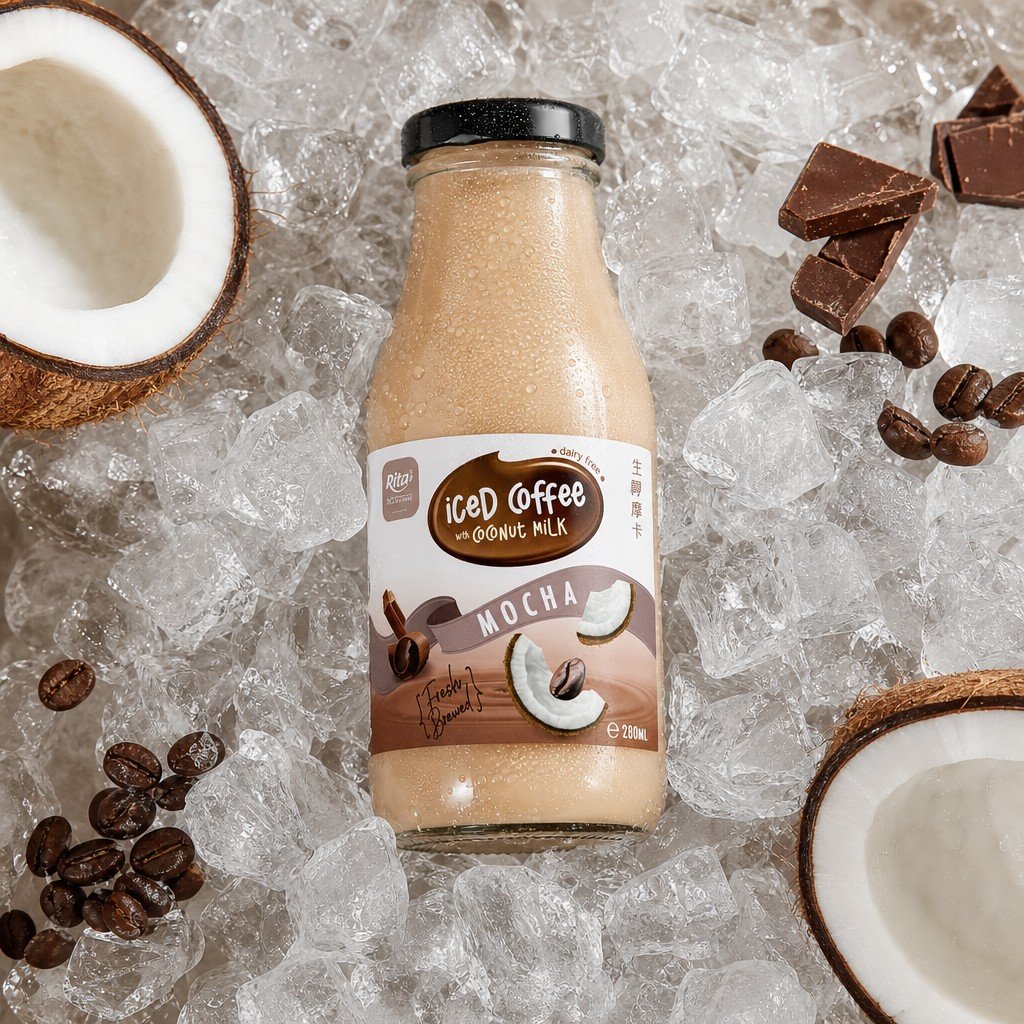
The product's ingredient list centers on coffee beans sourced from professional coffee farms, premium cocoa and mocha flavoring, and coconut milk. By avoiding high-sugar syrups common in conventional mochas, the formulation delivers a deep chocolate note with a clean finish. Coconut milk contributes a subtle tropical undertone that complements rather than competes with the coffee base, giving the beverage a distinct identity on crowded shelves.
This flavor architecture appeals to two audiences simultaneously. Consumers seeking a plant-based alternative appreciate the absence of dairy, while traditional mocha drinkers discover a familiar profile with a refreshed texture. For retailers, the dual appeal broadens the addressable shopper base without requiring separate SKU management.
Ingredient Sourcing and Supply Chain Transparency
Traceability is increasingly a purchasing criterion for European buyers. The coffee component of this beverage originates from dedicated coffee-growing regions, with sourcing practices documented through the manufacturer's quality systems. Coconut milk, meanwhile, draws on Vietnam's established coconut supply chains, where raw material quality is monitored from plantation through processing.
These sourcing relationships underpin the consistency required for large-scale export. Brands evaluating private label partnerships often prioritize suppliers who can demonstrate stable input quality across production batches, particularly for flavored beverages where recipe fidelity directly affects repeat purchase rates.
From Our Orchards, Gardens and Fields, Raw Material Sourcing
Ingredient provenance shapes both taste and sustainability credentials.
Coconut milk used in the mocha formulation traces back to Vietnam's coconut-growing regions, where plantation management practices influence the quality of the raw material that eventually reaches European shelves. The Ben Tre coconut farm journey from plantation to high-quality products illustrates how raw material oversight begins long before processing, with harvesting timing and handling protocols affecting the creaminess and flavor purity of the final coconut milk.
Coffee sourcing follows a parallel path. The Vietnam highlands coffee gardens during peak harvest season provide the beans that anchor the beverage's flavor profile, with harvest-season selection ensuring the aromatic intensity expected in a premium RTD mocha.
Broader agricultural sourcing across the manufacturer's portfolio draws on the Mekong Delta as a high-quality raw ingredients area, a region whose fertile conditions and established farming networks support consistent input quality for beverage production at scale.
For those interested in seeing these sourcing environments firsthand, footage from the coffee-growing regions is available at https://www.youtube.com/watch?v=F2yJLjUYiuo
Market Positioning Across European Retail Channels
Premium RTD mocha competes on experience, not just price.
In Germany and France, specialty coffee culture has driven demand for bottled beverages that approximate café-quality flavor. The Netherlands and Spain show strong convenience-oriented consumption, where single-serve formats dominate impulse purchases. Nordic markets, characterized by high per-capita coffee consumption and pronounced sustainability expectations, reward packaging choices that align with deposit-return infrastructure and recycling norms.
Against this backdrop, the Rita Iced Coffee with Coconut Milk Mocha positions itself as a bridge between the coffee and confectionery segments. Its 280ml volume suits portion-controlled consumption, while the glass presentation supports premium shelf placement in both grocery and specialty retail environments.
Competitive Comparison in the Plant-Based Mocha Segment
| Attribute | Coconut Milk Mocha (Glass) | Dairy Mocha (PET) | Dairy Mocha (Can) |
|---|---|---|---|
| Base liquid | Coconut milk | Dairy cream | Dairy cream |
| Packaging material | Glass bottle | PET plastic | Aluminum |
| Flavor protection | High (oxygen barrier) | Moderate | High (light barrier) |
| Recyclability perception | Premium, widely recycled | Variable by region | High |
| Shelf life | 24 months | 6-9 months typical | 9-12 months typical |
| Target shopper | Plant-based, premium | Mainstream | Mainstream |
The comparison highlights why glass-bottled, coconut-based mocha occupies a distinct tier. Longer shelf life simplifies distribution logistics for importers, while the plant-based formulation taps into a consumer segment that continues to expand across Western and Northern Europe.
OEM and ODM Opportunities for European Brands
Private label demand in RTD coffee is accelerating.
RITA Food and Drink Co., Ltd, established in 2004, operates as a leading Vietnamese OEM/ODM beverage manufacturer and global exporter, supplying brands in more than 180 countries. With over 50 automated production lines and approximately 1,200 containers exported monthly, the company offers the scale required for European distribution contracts. Its OEM manufacturing service enables brands to develop proprietary RTD coffee products using proven formulations, while the RITA coffee drink series catalog provides a reference portfolio for buyers exploring category options.
The company's broader Rita Iced Coffee with Coconut Milk Mocha product page details specifications relevant to procurement teams, including volume, packaging format, and ingredient composition.
Certification Framework Supporting Export
Compliance credentials determine market access.
- BRC and FSSC 22000 certifications align with major European retailer supplier requirements.
- Halal Jakim and Halal HCA-GCC certifications serve diverse consumer segments across export markets.
- Kosher certification broadens accessibility in specialty retail channels.
- ISO, GMP, HACCP, and SMETA audits document quality management and responsible sourcing practices.
With exports reaching over 200 countries and territories, RITA's certification portfolio addresses the documentation demands that European importers typically impose during supplier qualification. For brands considering a full ODM partnership, this compliance foundation reduces onboarding timelines and regulatory friction.
The product itself, available through the Rita Iced Coffee with Coconut Milk Mocha 280ml Glass Bottle listing, serves as both a retail-ready SKU and a formulation base for customized variants.
Sustainability Considerations in the RTD Coffee Value Chain
Sustainability extends beyond packaging material selection.
For European buyers, a product's sustainability profile encompasses sourcing practices, packaging recyclability, transport efficiency, and shelf-life economics. Glass bottles, while heavier than polymer alternatives, benefit from well-established collection and recycling systems across the EU, supporting circular material flows. The 24-month shelf life reduces write-off risk for distributors, an often-overlooked dimension of waste reduction in beverage supply chains.
Plant-based formulations also influence the value chain. Coconut milk sourcing from established Vietnamese supply networks carries different land-use and processing considerations compared to dairy production, and buyers increasingly request documentation on these upstream factors during sustainability assessments.
Transport planning represents another lever. The manufacturer's monthly export volume of approximately 1,200 containers enables consolidated shipments, improving per-unit logistics efficiency for large European import orders. Combined with a long shelf life, this allows distributors to plan inventory cycles that minimize emergency restocking and associated freight emissions.
Consumer-Facing Sustainability Signals
On shelf, the glass bottle communicates durability and reusability. The label design, featuring coconut halves, coffee beans, and chocolate pieces against white, brown, and beige tones, reinforces ingredient transparency without relying on unverifiable claims. For shoppers scanning quickly in a chilled display, these visual cues function as shorthand for a premium, thoughtfully formulated product.
Frequently Asked Questions
What makes the Rita Iced Coffee with Coconut Milk Mocha suitable for European retail?
The product combines a 280ml glass bottle format with a 24-month shelf life, plant-based coconut milk formulation, and certifications including BRC, FSSC 22000, and Halal. These attributes align with European retailer supplier requirements and consumer expectations for premium RTD coffee.
How does coconut milk affect the flavor profile compared to dairy mocha?
Coconut milk delivers a lighter mouthfeel with a subtle tropical undertone that complements the coffee and cocoa base. The formulation avoids high-sugar syrups, resulting in a deep chocolate flavor with a clean finish rather than the heaviness associated with cream-based mochas.
Can European brands develop private label versions of this beverage?
Yes. RITA Food and Drink Co., Ltd offers OEM and ODM services that allow brands to customize formulations, packaging, and labeling. The company operates over 50 automated production lines and exports to more than 200 countries and territories.
Why is glass chosen over PET or aluminum for this product?
Glass provides an oxygen barrier that protects coffee and cocoa aromatics throughout the 24-month shelf life. It also carries strong recyclability credentials in European markets and supports premium visual positioning in refrigerated retail displays.
What certifications back this product for export?
The manufacturing facility holds BRC, FSSC 22000, Halal Jakim, Halal HCA-GCC, Kosher, ISO, GMP, HACCP, and SMETA certifications, covering quality management, food safety, and responsible sourcing documentation required by European importers.
Related news items:
Newer news items:
- Honoring the Women of Rita Beverage on Vietnamese Women's Day 2026 - 21/10/2026 06:56
- Rita Beverage Team Building 2026: A Journey of Connection, Joy and Togetherness - 19/10/2026 06:24
- Ginger Milk Tea Peach Flavor Reshapes the RTD Tea Category - 15/10/2026 21:09
- Protein Water Demand Creates New Opportunities for Blueberry Drinks - 13/10/2026 20:51
- Supply Chain Spotlight On The Melon Drink With Nata De Coco - 11/10/2026 22:50
Older news items:
- Rita Team Building 2026: Ready for Hon Rom, Phan Thiet - 08/10/2026 04:54
- Sustainability Meets Flavor in Coco Sea Moss Coconut Water Launch - 07/10/2026 08:23
- How Purple Compound Juice Is Winning Over Shoppers - 07/10/2026 01:20
- From Arrival to Adventure: Rita’s Hòn Rơm Team Building Itinerary - 05/10/2026 18:00
- Yuzu Peach Electrolyte Water Drink Sees Growing Demand Across Europe - 05/10/2026 06:40
 084 274 3784788

 No. 8, Thong Nhat Boulevard, Song Than 2 Industrial Park, Di An Ward, HCMC, Vietnam.